
 M. DAWSON
 J. CLARKE
 M. SMOLEN
 E. FER
 C. KUHNLE
 M. CHOURRAUT
 M. BENUS
 F. ANTON
 L. BOZIC
 K. HOSKOVA
 J. FOX
 BREZINSKI/BREZINSKI

 A. PETERS
 V. KHUDZENKA
 E. MEDVECKZKY
 GRIJIC/NOVAKOVIC
 L. QIANG
 M. DE JONGE
 R. POULSEN
 A. CHERVOVA
 S. TARNOVSCHI

 J. MOCKE
 E. LEVEMYR
 S. RAFAEL
 H. TAKAKU

 M. GRAZIANI
 J. EGAN
 N. LJUBEK
 MINDE/HAMAR
 PINTA/MOZZICAFI
 S. LAMMLER
 A. BUSLAIEVA
 M. WEGMAN
 S. REINOSO
Every Crushing Stroke - The Olympic Revolution, Part III
|
"Every Crushing Stroke" is a classic (book) about performance kayaking written by three-time World Cup Champion Scott Shipley and published in January 2002. "The Olympic Revolution" is the first chapter of the book and gives an interesting image of canoe slalom in the eighties and nineties. In the coming weeks Sportscene will re-publish extracts. The book has become a collectors item but can still be bought on Amazon. Below extract number 3. Previously published extracts:
|
Racing
Scott Shipley, 2002 - Today, juniors come from training centers. The best of juniors come from organized programs with coaches and training partners. In my time it was different. Our country had a smattering of juniors training largely on their own around the country. The first time I raced another junior from America was after a five-day road trip across America. We were a hodge-podge of people from across the states. For most of us the Junior Nationals was the one chance we had to see each other complete for the entire year. Was I a dark horse? We all were dark horses. I was twelve the first year I competed there and only a year or two younger than most of the serious competitors. We came through as a pack of talented cadets who could already best the country’s top juniors.
There was little back then in the way of a junior racing circuit. Often we would all meet at a Junior training camp for a week or so before the Nationals to train together. Then we would each race at the Junior Nationals and either win or else return home to train up for the following year’s race. On my first try I finished a respectable fourth. By my third at Nationals I had worked my way up to second - the last time I would ever leave this race without a National title.
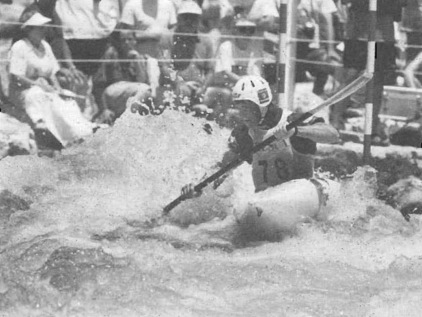
 There were some real benefits to being a junior in a sport that didn’t have any funding. Top racers were desperately in need of money and would gladly hire themselves out as coaches for a week here or a week there. These became a yearly destinations for my brother and I. There wasn’t much money in the sport at the time, neither for the top athletes. My parents were no different and could only really afford to send Paul and I across the country once a year. We’d squeeze the rock to get as much from these trips as possible. Paul and I would arrange to take part in one of these camps before bumming a ride to the Nationals from there. We’d coached by the likes of Jon Lugbill, Mike McCormick and Richard Weiss. They were the best of their time and I was all at once in awe of knowing them as well as determined to learn to match their skills.
I sometimes think that the US should continue those camps as they were. These were the precursors to New England’s Adventure Quest and the NRC junior camps. I think they were some of the best learning experiences of my developing years. Often the Nationals would be a part of a series of races. Organizers like Peter Kennedy would arrange and help coach the camps such that we could spend three weeks racing in the Mid-America Series while attending training camps between each race. It was the kind of made-to-order perfect training that kids have very little access too.
Like so many things these camps fell victim to our Olympic initiation. Big sponsors took over the series. The junior camps just faded away.
The eighties were the heyday of the U.S. C-1s and Britain’s Richard Fox. It seems now like the world of paddling put aside its collective thinking caps to mimic these great paddlers. Rather than testing new techniques or designing new boats we simply followed the lead of these elite few. Any jewel of knowledge that came from these training camps started with “Lugbill says..” or "Fox did it like..” These attitude was especially pervasive in the U.S. where we were so proud of the results our canoes were producing.
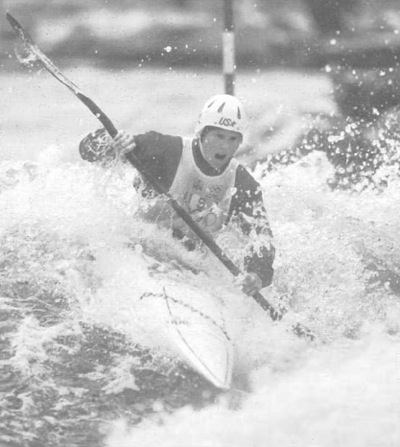
Our junior training camps focused on learning to paddle like these C-ls by mimicking their flashy pivoting upstreams and aggressive attacking style. New techniques came down from the top; they were innovated by Lugbill and Hearn, refined by their now famous technician/coach Bill Endicott and then became the gospel we preached to each other. Winning the Nationals became an obsession for me. With each loss I would rededicate myself to success in the coming year. Often, especially at first, an entire year of waiting for my next shot seemed like an unending eternity. I would later find that it was just enough time to get ready. My training at home would become stricter and more regimented each year. At first it was my goal to ensure I paddled every day during the week; then I began to focus on improving the quality and duration of these efforts. No longer was it good enough to just be paddling every day. I began to focus on making each workout count, to make a real improvement each time I got on the water. I could feel myself getting better and better each year, but I could also see my competitors doing the same thing. Despite my improvements I was disappointed to find that three years of training had only brought me half the way I needed to go to win Junior Nationals.
Editor: Jan Homolka