
 M. DAWSON
 J. CLARKE
 M. SMOLEN
 E. FER
 C. KUHNLE
 M. CHOURRAUT
 M. BENUS
 F. ANTON
 L. BOZIC
 K. HOSKOVA
 J. FOX
 BREZINSKI/BREZINSKI

 A. PETERS
 V. KHUDZENKA
 E. MEDVECKZKY
 GRIJIC/NOVAKOVIC
 L. QIANG
 M. DE JONGE
 R. POULSEN
 A. CHERVOVA
 S. TARNOVSCHI

 J. MOCKE
 E. LEVEMYR
 S. RAFAEL
 H. TAKAKU

 M. GRAZIANI
 J. EGAN
 N. LJUBEK
 MINDE/HAMAR
 PINTA/MOZZICAFI
 S. LAMMLER
 A. BUSLAIEVA
 M. WEGMAN
 S. REINOSO
Contributors - Paddlesports Back to overview
Rafting
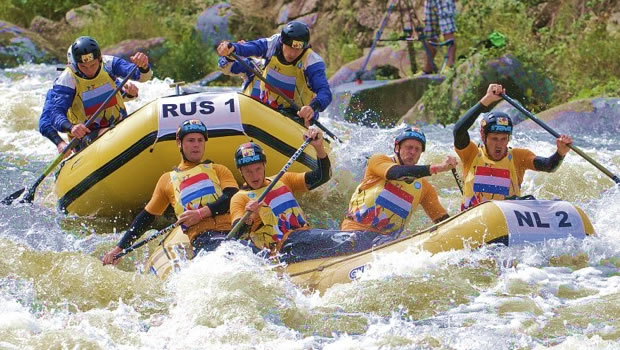
Negotiating whitewater using an inflatable raft paddled by teams of 4, 6, or 8.
Rafters use single-blade paddles, rafts come in a variety of models and vary in size from 13 to 18 feet function-depending.
Ever-growing in popularity and in participation globally, rafting demands utmost attention with frequent risk of capsize – there 5 types alone! Paddlers learn all the means to re-right themselves as well as the various techniques employed for swift and continuous downstream momentum.
So much is tested on a raft; individual athlete strength and stamina, accuracy of lines, leadership twinned with ability to decision-make, vessel-speed, teamwork and collective ability to pass obstacles along with controlling sideways movement.
Like play-boating, there are many tricks that can be done with a raft including wave-surfing, nose-dunking and pirouetting.
Rafting is not an Olympic sport, it is governed by the International Rafting Federation. Yearly international events are numerous including continental cups, World Cups stages and national opens. Youth, senior and masters World Championships also occur annually – competitions include four events: 'sprint' (2-3 minutes; short distance speed paddling), 'head to head' (2 teams descend a 2-3 minute whitewater course), 'slalom' (14 up and downstream gates, timing and penalties accumulated) and the blue-ribbon 'downriver' (1 hour of timed racing over powerful and continuous rapids). Total points across all four events count for overall glory.
Also read 'The four disciplines of rafting explained'.