
 M. DAWSON
 J. CLARKE
 M. SMOLEN
 E. FER
 C. KUHNLE
 M. CHOURRAUT
 M. BENUS
 F. ANTON
 L. BOZIC
 K. HOSKOVA
 J. FOX
 BREZINSKI/BREZINSKI

 A. PETERS
 V. KHUDZENKA
 E. MEDVECKZKY
 GRIJIC/NOVAKOVIC
 L. QIANG
 M. DE JONGE
 R. POULSEN
 A. CHERVOVA
 S. TARNOVSCHI

 J. MOCKE
 E. LEVEMYR
 S. RAFAEL
 H. TAKAKU

 M. GRAZIANI
 J. EGAN
 N. LJUBEK
 MINDE/HAMAR
 PINTA/MOZZICAFI
 S. LAMMLER
 A. BUSLAIEVA
 M. WEGMAN
 S. REINOSO
The four disciplines of competitive rafting explained
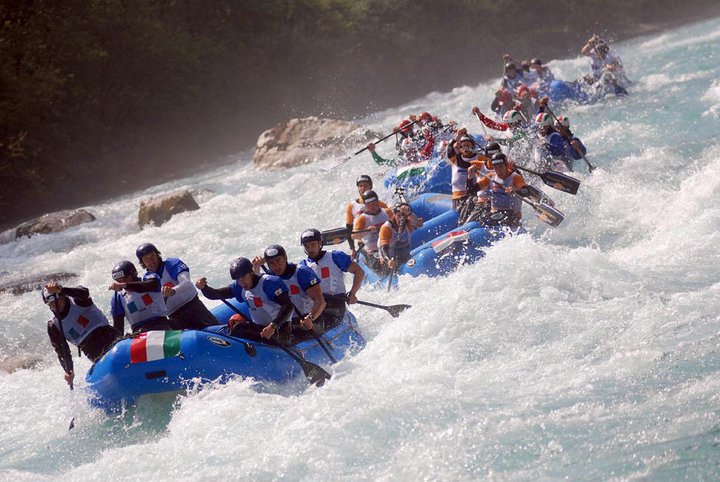
Rafting competitions consist of 4 disciplines or challenges: Sprint, Head-to-Head (H2H), Slalom and Downriver. The points earned in each discipline are added to determine the Overall winner and final positions. Each team has four or six members with the option to have a reserve.
1. The Sprint is a hard, fast, short burst of speed for the teams. It is ideally over a fairly short distance and is about 2 to 3 minutes of hard paddling for 10% ofthe overall points. It is always done first, cannot be on a Class 5 rapid and teams are set off one by one, hence racing the clock and not each other.
 2. The H2H is without doubt the most visually exciting discipline as it is pitting two teams together in a fast paced sprint for the finish line. It is ideally over a shortish distance but must be through a rapid, normally taking teams about 2 to 3 minutes to run the course. The two teams are set off together with the team having the best time in the Sprint being given lane choice.
Although the race organisers always try to have the lanes as even as possible this is not easy as a river is so dynamic and changing river levels can also create problems. Ideal locations for a H2H have more than one line through the course allowing teams to overtake. It counts for 20% of the total points and is an elimination race in which pairs of teams race down a section of powerful rapids. The winner of each heat proceeds to the next round and eventually just 2 teams will remain for the Final.
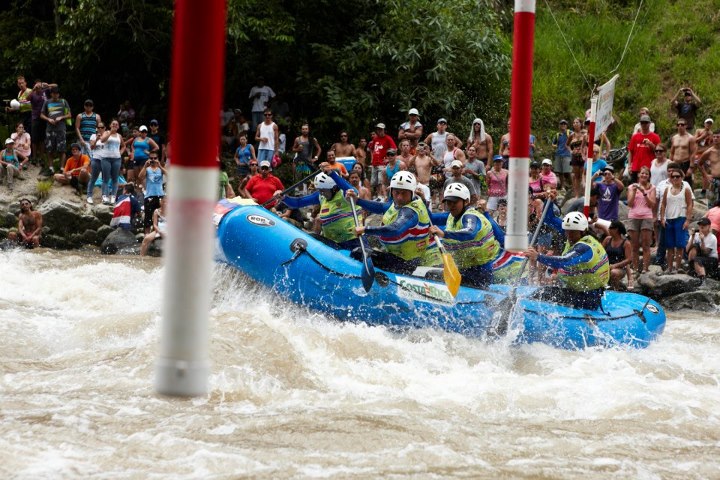 3. The Slalom is the most technically challenging event and counts for 30% percent of the total points. This event demands a high level of technique and teamwork to negotiate the rafts through 12 downriver and upriver gates in powerful rapids. Touching, failing to pass or intentionally moving a gate results in a penalty. Each team runs the course twice and their best time is used to determine the results.
4. The Downriver is the star event and is worth 40% of the total score. The race is close to an hour of racing along of a section of continuous and powerful rapids. Technical ability and endurance are essential elements to ensuring a good position in this event which is crucial for the teams that aspire to win the Championship. The points earned by the teams in the previous events determine their position in the starting line-up in groups up to 5 rafts.
For more information and the history of competitive rafting visit the International Rafting Federation website.