
 M. DAWSON
 J. CLARKE
 M. SMOLEN
 E. FER
 C. KUHNLE
 M. CHOURRAUT
 M. BENUS
 F. ANTON
 L. BOZIC
 K. HOSKOVA
 J. FOX
 BREZINSKI/BREZINSKI

 A. PETERS
 V. KHUDZENKA
 E. MEDVECKZKY
 GRIJIC/NOVAKOVIC
 L. QIANG
 M. DE JONGE
 R. POULSEN
 A. CHERVOVA
 S. TARNOVSCHI

 J. MOCKE
 E. LEVEMYR
 S. RAFAEL
 H. TAKAKU

 M. GRAZIANI
 J. EGAN
 N. LJUBEK
 MINDE/HAMAR
 PINTA/MOZZICAFI
 S. LAMMLER
 A. BUSLAIEVA
 M. WEGMAN
 S. REINOSO
Duncan Paul and Donovan Boshoff finish the Yukon 1000
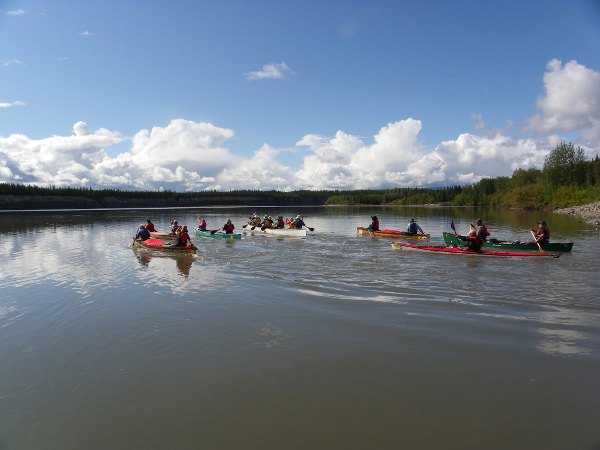
Just 12 teams entered the 2014 Yukon 1000, an unsupported biannual canoe and kayak expedition race, which is the longest in the world at 1000 miles (1 600 kilometres). Among the entrants this year were Natal Canoe Club's Duncan Paul and Donovan Boshoff, who finished in fourth place overall.
Over the course of eight days, in a boat carrying about 100 kilograms of supplies, they paddled up to an incredible 243 kilometres in a single day in the stunningly beautiful and remote scenery of the Yukon, where seeing any other competitors during the course of the event is far from guaranteed.
The race began in Whitehorse, the capital of the Yukon, Canada and concluded at the Alaskan Pipeline/Dalton Highway USA. For those who have watched the Discovery Channel's "Ice Road Truckers", that's where the hauling of loads takes place.
Paul has taken on plenty of endurance challenges in his life, including the Yukon River Quest, which covered a distance of 740 kilometres. He has climbed the 6300 metre Mera Peak in Nepal, ascended Kilimanjaro three times, paddled the length of Lake Kariba, and skiied to the South Pole.
Reflecting on his recent Alaskan adventure, Paul said: "The Yukon 1000 was one of the hardest things I have done. The South Pole was incredibly cold (up to minus 50°C). Physically, it was long hours on skis, but at a slow pace and you had to manage the cold. On the Yukon 1000, you are paddling at a pace. The whole time we were concentrating on the GPS or Garmin, checking our pace, where we were going, checking the current. We paddled up to 17 hours per day, often in temperatures below zero in driving, freezing rain and wind. It was relentless. One day we burnt 23 000 calories."
Boshoff said Paul's endurance experiences helped pull them through some challenging times. "I think his stories definitely got us through the race, and his experience. You need something like that. You need stories to divert your mind. To have that entertainment was a big part of it for me. You can see his experience coming through.
"He is a tough guy and you know regardless of what the situation is he is going to maintain his form and his thinking is going to be straight."
With the sun going down only very late in the day in Alaska, and with only a short compulsory stop of six hours each day, many long hours were spent in the boat.
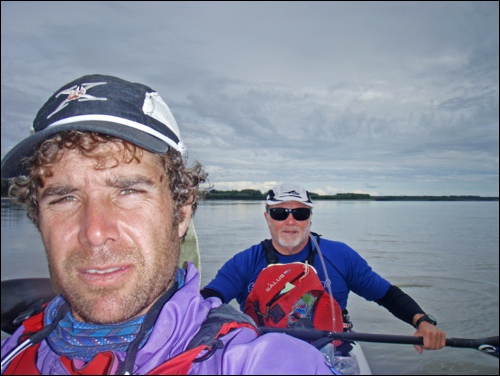 "We were able to enjoy the scenery and wildlife because we were not so tired, but as the race progressed it wore us down," Paul said. "We thought we were doing well when we sat for seven hours, nine hours without getting out of the boat. Towards the end, we were sitting for up to 12 hours before stretching our legs."
The accumulated lack of sleep of only three to four hours per night and the work they put in each day required some unusual measures to keep the pair going. "We had these little caffeine tablets to give us a boost at four o'clock every afternoon to take us through until 11pm. By 11pm, when we had to stop, we would be ready to sleep. By the end of the race, we were taking that stuff at eight o'clock in the morning! Sleep deprivation was a huge factor. Sometimes when we were paddling along, we were dozing off and almost falling out of the boat we were so exhausted," Paul shared.
Adding to the challenge were the physical ailments the Pietermaritzburg pair had to deal with. "I had bad feet. Water got into my boots on two days in a row. My feet went white and swollen and it was incredibly painful. It's called trench foot. You can't walk. On the last day, I realised what was going wrong but the damage was done. My feet were sore for 10 days afterwards and still peeling a month later," Paul said.
Boshoff developed acute tendinitis in both his wrists. Being in such a remote place, with doctors not accessible, that was particularly challenging.
"The goal becomes finishing the race," he explained. "At times, you're racing, but often you're doing what you have to do to make sure that you can get through. With tendinitis, it's pain killers and strapping, and going at a pace where you know you're doing damage, but you're not going to hurt yourself to the point where you're going to have to stop." As it was, Boshoff tore a bicep in the last 20kms but managed to grit it out without missing a stroke.
"It's the same with everything, with all the aches and pains, dehydration, etc. so you take everything back to making sure you maintain the level that will get you through the race. It becomes a balancing act."
The fact of the matter, though, is that the Yukon 1000 is a race and as it played out for the team, which went by the name of the South African Dungbeetles, they were involved in a tight battle with the American Sam McGee team. Paul said. "We were racing them for 800 kilometres, sometimes neck and neck.
"Early on in the tussle, I said to them 'we're basically doing the same speed, why don't we ride each other's wave and try to catch the boat in front?' They were hard cases, tough guys, and one of them said to me 'you can ride my wave, but far back enough so that I can't see you', so we got the message loud and clear. Then the race was really on.
"With respect to them, we beat them because they made a bad tactical decision and we made a good one. They were strong and worthy opponents. We camped the last night about 100 metres from them on the same sandbar and I heard them saying they needed to get up at half-past-three and get going by four."
Boshoff's detailed and meticulous planning for the full 1600km and the wonders of Google Earth helped the Natal Canoe Club pair precisely navigate their way and gave them a slight edge over Sam McGee over the final 200 kms as the SA Dungbeetles beat them by a mere seven minutes.
Considering what lessons he learned from the experience, Paul said: "I think one of the biggest things is the power of your mind and the ability to set a goal, stay fully focused and disciplined. Also, the level of pain, discomfort and what your body can absorb. Once your mind is there, you can push yourself onto another level completely. As long as you are fit and healthy, know what your body is capable of, understand the power of your mind, you mentally feel as if you could do almost anything.
"If you set yourself a physical and mental goal over an extended period like that, you know it is possible. If there is the slightest hint or doubt of any kind whatsoever in your mind, paddling this race would be impossible. There are constant challenges; a simple mistake could easily prove fatal and you are totally vulnerable in such a vast wilderness.
"You just need the very basics to live. We slept on rocks and on mud and incredibly we slept well."
"We congratulate each and every finishing team as we knew they all individually had their own challenges.”
Having taken on and completed the incredible 1 600 kilometre event, both Paul and Boshoff are eyeing future endurance challenges.
"I'm planning to do the North Pole for my 60th birthday, which is in April next year which happens to be the best time. All things being equal, I should be on the ice for my 60th," Paul said.
Boshoff is planning to do the Grand Traverse, which covers a very challenging 220 kilometres across the main range of the Drakensberg and takes strong hikers between six and 10 days to complete, and the Freedom Challenge, a 2 400 kilometre mountain bike route between Pietermaritzburg and Cape Town.
Both Paul and Boshoff agreed: "It's about the adventure of getting out there and doing something different and challenging and stretching your boundaries."
Event website: http://yukon1000.com/y/y1000.php