 M. DAWSON
 J. CLARKE
 M. SMOLEN
 E. FER
 C. KUHNLE
 M. CHOURRAUT
 M. BENUS
 F. ANTON
 L. BOZIC
 K. HOSKOVA
 J. FOX
 BREZINSKI/BREZINSKI

 A. PETERS
 V. KHUDZENKA
 E. MEDVECKZKY
 GRIJIC/NOVAKOVIC
 L. QIANG
 M. DE JONGE
 R. POULSEN
 A. CHERVOVA
 S. TARNOVSCHI
 J. MOCKE
 E. LEVEMYR
 S. RAFAEL
 H. TAKAKU
 M. GRAZIANI
 J. EGAN
 N. LJUBEK
 MINDE/HAMAR
 PINTA/MOZZICAFI
 S. LAMMLER
 A. BUSLAIEVA
 M. WEGMAN
 S. REINOSO
Paracanoe athletes Selinger and Fernandes on new Paralympic era

Nick Harding | @nickhdg | Sportscene - Very excitingly, paracanoe sprint will feature at the Rio 2016 Paralympics Games for the first time ever! The cauldron at the London Paralympics may have been extinguished nearly five months ago, but a fiery excitement builds in the canoe world. Sportscene looks ahead with a beady eye with the help of the sprint dream-team Christine Selinger and Fernando Fernandes de Padua.
Amazing title defender and coach Christine is a Canadian twice gold-medallist (V1-LTA) and double silver winner (K1-TA) at the 2010 and 2011 ICF Canoe Sprint World Championships. She finished third in both of her events at this year's 2012 ICF Paracanoe World Championships, Poznań.
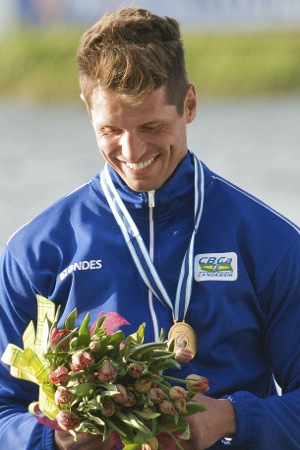 Brazilian celebrity Fernando is a double World Championship gold superman (K1-A), also at Poznań 2010 and Szeged 2011. He won first place in June this year at the paracanoe World Championships in the same event with a staggering time of 53.550 seconds.
Currently all paracanoe competitions are held over 200m.
After being an exhibition event in Halifax at the 2009 ICF Canoe Sprint World Championships, paracanoeing made its first full debut a year later at the World Championships in Poznań. 63 athletes from 31 nations competed in four 200m events: men's and women's kayak (K) and canoes with outrigger floats (V), these were then separated into mixed or independent functional ability categories: Legs, Trunks and Arms (LTA). Christine: "weather conditions play a big role in paracanoe because we cannot steer kayaks how an able-bodied person might."
Paralympic inclusion
Let's turn back time a little. Location: Guangzhou China, date: 11th December 2010. This was the hallmark moment in paracanoe sport's history; it was given the nod yes by the International Paralympic Committee to become Paralympic. This means so much to so many athletes: recognition, being seen, respect, future investment in the sport by companies and a tangible goal. Christine: "to finally have an attainable dream is phenomenal."
Three rounds of decision-making were tense; first the Governing Board voted unanimously to maintain all previously included sports and in the second tour they agreed on a yes, 7:3, to up the number of sports from 20 to 22. In the third round a nail-biting 6:4 decision overruled in favour of only including on this occasion paracanoe and para-triathlon from an abundant list of para-badminton, basketball (intellectual disability), powerchair football, para-golf and para-taekwondo.
Blossoming sport
Since inclusion, the sport has flourished and continues to expand and develop attracting more and more participants each year. The Paralympics are the all-consuming end goal, an ultimate show of pride for most athletes with physical disabilities. Fernando makes a really good point that;
Paracanoeing has one big difference from other Paralympic sports for wheelchair users, it represents freedom and beauty. In addition to being aesthetically pleasing positioned in a kayak, you are free on the water and this creates a sense of self-esteem.
This sense of freedom and the notion of competing in Paralympic contest are probable motivations driving a group of thirty Brazilian athletes who practise the sport under Fernando's guidance. "When I took up paracanoeing, I was the only medullar injured athlete (wheelchair user) in Brazil; however, today, we have an increase of approximately 900%."
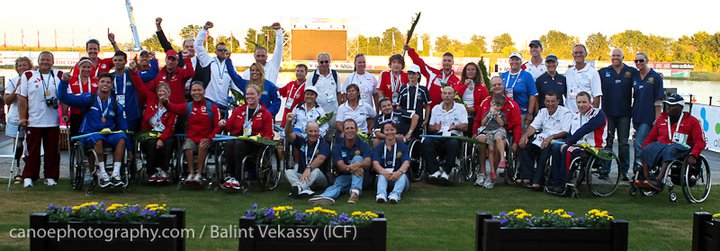
Confidence and togetherness also come from the camaraderie between competitors off the field at the World Championships. All have had similar experiences or are continuing to experience difficulties, all fight for a better world and equality for disability sport. "Sport is and always will be a tool for social inclusion" as Fernando put it profoundly. Despite more new faces appearing each year, Christine affirms:
We can all recognise that we have been through something similar and we have fought hard to be at a World Championships.
"We all have some measure of respect for one another before we step out and compete. Socialising is therefore just as important as the racing. Though the sport will continue to become more competitive, I believe the social part will remain. Who doesn't like to celebrate a race well paddled?," she chuckles to herself.
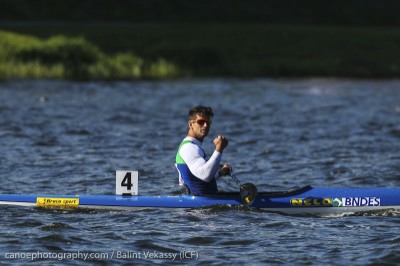 When questioned about the level of performance both Christine and Fernando agreed that we have already seen a huge increase at national and international levels alike. Fernando alludes that "some of the main medallists from the World Championships are," like himself and Christine, "people who have built up good sporting performances before having a physical disability."
Before his motor accident leaving him paralysed, he had an illustrious modelling career, was a professional football player and became 'Amateur Champion' in boxing during army service. Christine had a climbing accent injuring her back in 2006. Therefore paracanoeists are individuals who are really driven, "all of us will have to improve ourselves to be able to continue to compete," added Christine. The desire for improvement is part of the human spirit. "There are many athletes that are fighting to be on the podium and this makes the sport ever more beautiful," says Fernando.
With this increase in performance, federations are also upping their games. Traditionally Brazil, Canada, Great Britain, Hungry and Italy have been the most developed nations for the sport, yet this is also changing, and rapidly too. New Zealand and Tahiti, where the Va'a outrigger canoe is said to have its origins, are at present doing well in the canoe side of the programme. Tahitian Patrick Viriamu won gold in V1 200m (LTA, TA, A) at the 2010 ICF Canoe Sprint World Championships and a silver at this year's ICF Paracanoe World Championships, both in Poznań.
Fernando has been rewardingly dedicating his time and knowledge to help Paraguay and Chile promote themselves, countries where there is currently a lack of information and support available. The Argentinians on the contrary are advancing quickly, we will keep a look out for them at Rio!

Challenges from London to Rio
With sell-out events and highly supportive and large crowds, the London Paralympics were considered as the best in history. "London set the standard for Paralympic sport, there society saw superhumans capable of overcoming their physical achievements and even making unprecedented achievements." Media interest in disability sport was plentiful and the general public were more aware of The Paralymics than ever.
Looking onto Rio 2016, it will boast an 8-event programme in K1 and V1 200m. It's probably too early to go to the 'bookies' and bet on the future medallists, especially where the calibre of current and future athletes coming through the ranks is so high, but it would be an honour to have predicted double golds from Christine and Fernando! Also keep your eyes peeled for Britain's Patrick Mahoney too voted as ICF Paracanoeist of the Year 2011. Sportscene will be there supporting them and providing coverage!
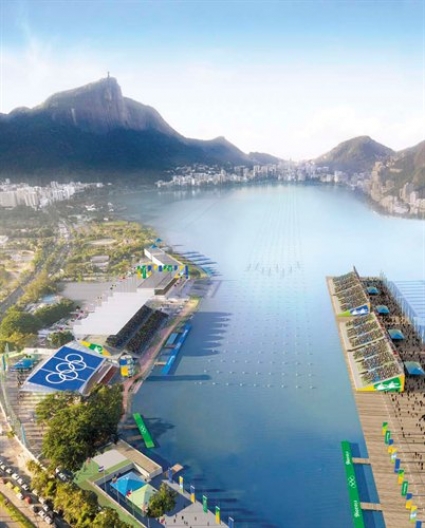
We can of course expect all things samba, but will it have a new edge and uniqueness over its predecessors? Christine: "Rio will mark the debut of both Paracanoe and Triathlon which should bring in a fairly large crowd. I am incredibly excited!" Fernando: "The people of Brazil are very welcoming and we will be waiting here with open arms to welcome and pay tribute to athletes from all over the world."
Despite this positivity, there are questions in the sport world over fair ticket-pricing, access to them and whether there will be any implications on sales as a direct result of geographical distance and increased air fares from Europe.
However, before Rio there are a few issues that need to be addressed by federations and clubs alike:
1) Athletes with different disabilities confront different obstacles at local training facilities; for example a wheelchair-user may faces barriers in terms of accessibility that an amputee may not. Fernando was full of praise; "at all the competitions I have participated in, I have never had any problems and I think the work the ICF is doing is great." With more investment and interest in paracanoe now where it is Paralympic, Christine hopes that more clubs will become more wheelchair-friendly.
2) Classifications can be problematic, it can often be for individuals with certain disabilities to compete. Christine outlines: "Those who may be missing one arm or have very limited use of their arms can definitely still paddle, but find it incredibly difficult to compete against athletes with more function. I would like to see the addition of new classifications as the number of athletes competing continues to grow."
3) Changing classifications affect boat design; size and weight. Christine also suggests how she would also like to see stricter practices around boat control for both canoes and kayaks in order to make the races as fair as possible. The major boat companies should "develop newer models to fit the paracanoe standards as well as further development to change the standards in order to give each athlete more choice over the type of boat they use."
4) Finally there is the issue of keeping not just paracanoe, but all Paralymic sport in the public eye post-London Games. Fernando is working incessantly on increasing the amount of information available concerning paracanoeing in Brazil through social network sites and his TV program, encouraging new participants. Christine believes passionately that "as the media presence in Paralympic sport grows, too will the crowds and the number of athletes participating. So hopefully we can accomplish some of that in the next 4 years."
5) In the years running up to Rio, Christine would like to see K2 and V2 boats competing at the Canoe Sprint World Championships which could be a potentially achievable target.
Looking beyond Rio
Paracanoe can only continue to get bigger, even more so now it has Paralympic status. It will continue to evolve as the boat technology continues to do so, like Fernando's new Brazilian pack of athletes more and more superstars of tomorrow will emerge onto the scene.
We could see more classifications added to the Paralympic event list. In 2011 the K1 Intellectual Disability category was included at the Special Olympic World Summer Games in Athens, the ICF recognises this opportunity and are working in harmony with the IPC to expand this part of the sport.
Other events could be added in addition to the new classifications, Christine suggested, perhaps similar to piloted Paralympic cyclists, "it would be nice to have Paracanoe also find a way for individuals with vision loss to compete as well." She then added, "maybe someday we will have K4s on the water!"
A development camp for paracanoe slalom featured at the Pan American Championships at Union de Tula, Jalisco Mexico. There could be an opportunity more so now than ever to further develop this sport as well. One day in the very distant future we may see a bid put forward for Paralympic recognition.
Through the grapevine, there are rumours within the sports sphere of the possibility of merging the Olympics and Paralympic Games. "It would certainly change things if they did – but I think it would change things for the better," outlined Christine positively. That is another article entirely!
Thank you both to Christine and Fernando for sparing your time to enlighten us.
Portuguese Translation: Mark Harwood