
 M. DAWSON
 J. CLARKE
 M. SMOLEN
 E. FER
 C. KUHNLE
 M. CHOURRAUT
 M. BENUS
 F. ANTON
 L. BOZIC
 K. HOSKOVA
 J. FOX
 BREZINSKI/BREZINSKI

 A. PETERS
 V. KHUDZENKA
 E. MEDVECKZKY
 GRIJIC/NOVAKOVIC
 L. QIANG
 M. DE JONGE
 R. POULSEN
 A. CHERVOVA
 S. TARNOVSCHI

 J. MOCKE
 E. LEVEMYR
 S. RAFAEL
 H. TAKAKU

 M. GRAZIANI
 J. EGAN
 N. LJUBEK
 MINDE/HAMAR
 PINTA/MOZZICAFI
 S. LAMMLER
 A. BUSLAIEVA
 M. WEGMAN
 S. REINOSO
Tom Hall reflects on last weekend’s sprint World Cup in Szeged
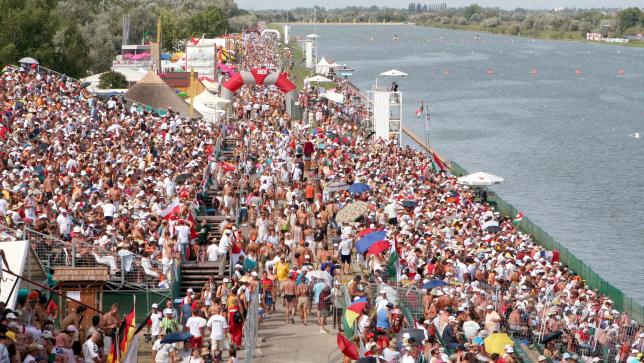
Tom Hall | Sportscene - My first time in Szeged was to cheer for the Canadians racing at the 2005 junior worlds. The senior team was training in Dunavarsany about 10 kilometres outside of Budapest, and we wanted to support our young teammates on our Sunday off.
In true Hungarian fashion it was a long hot bus ride. But worth it. A beautiful little city, Szeged is easily one of my favourites both to visit and for racing. The nightlife, cafes and restaurants, are great, but as a paddler there is something special about Szeged.
I remember the excitement I felt when we arrived. It was the course on which my friend and paddling mentor Steve Giles won the 1998 World Championships. And when we pulled off the two-lane highway and passed under the arch decorated with old canoes and kayaks, I felt like I was entering a place where paddling results mattered, where people other than parents and coaches cared about the outcome of races.
We spilled out of the bus and mingled with the fans, cheering for our younger teammates. I couldn’t believe how many people were there to watch paddling, and how many were drunk before noon. This is a good spot, I thought.
Why this memory is pertinent is because nine years later as I sit here at home scanning results to see how my friends performed, I realized that most of the people I rode the bus with that day in 2005 have moved on, replaced by the juniors we went to cheer for, which is as it should be.
If it’s not obvious, I love Szeged. I miss racing there. On the water the roar in the last 250 metres is unlike anything else I experienced paddling save maybe the Beijing final. It made me feel like a professional athlete, if only for a weekend.
But Szeged, despite being the place to paddle, has its issues like any course.
I wrote last week about preparing for the worst and hoping for the best. In Szeged you can generally count on it being hot with great fans and questionable wind. And from what I saw on the ICF feed, that was the case.
Wind changes, annoyingly often in the moments before a race. The amount of times I’ve raced in Szeged when the wind changed 180 degrees over the lunch break has taught me to be stoic about hoping for a favourable wind. It’s best to try to win your heat and get a middle lane, and be ready for whatever comes your way.
During heats on Friday the wind was a factor, and the outside lines seemed to be at a disadvantage. For the most part the best athletes were good enough to power through to the final. Germany’s Max Hoff and Sebastian Brendal had no problem with the wind, and come Saturday’s final finished off their world cup seasons with three wins each in the 1000m. As predicted Hungary’s Attila Vajda was right there, snagging second and reminding the field he’ll be a factor come Moscow.
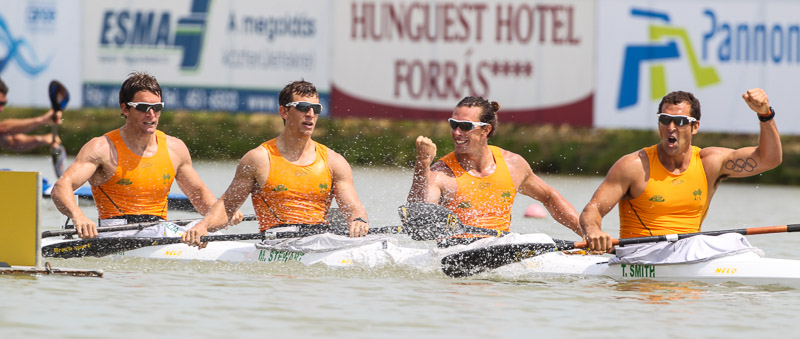
 The Australian team also had no problems with wind. Winning the K4, and getting two on the K1 1000M podium, Kenny Wallace and Murray Stewart, behind Hoff on is a huge achievement. And of course, the Hungarian team was strong in almost every event they raced.
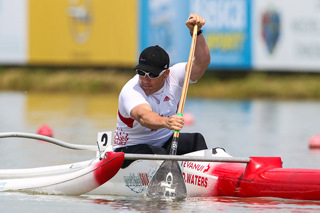
Two events I haven’t written about are paracanoe and women’s canoe. It’s exciting to watch paracanoe grow towards its first time in the Paralympics. Knowing the effort my friends on the Canadian paracanoe team have put in to their sport and knowing they’ll have a chance to race on the Paralympic stage is great. And of course, with 2020 within reach for women’s canoe, it’s also reached a point where it’s almost anyone’s race when the women line up.
Later this week look for a world cup 2014 round up and look towards the Moscow World Championships.
Links
- Results
- ICF Press Release (wrap + finals on YouTube)
Photographer: Balint Vekassy