
 M. DAWSON
 J. CLARKE
 M. SMOLEN
 E. FER
 C. KUHNLE
 M. CHOURRAUT
 M. BENUS
 F. ANTON
 L. BOZIC
 K. HOSKOVA
 J. FOX
 BREZINSKI/BREZINSKI

 A. PETERS
 V. KHUDZENKA
 E. MEDVECKZKY
 GRIJIC/NOVAKOVIC
 L. QIANG
 M. DE JONGE
 R. POULSEN
 A. CHERVOVA
 S. TARNOVSCHI

 J. MOCKE
 E. LEVEMYR
 S. RAFAEL
 H. TAKAKU

 M. GRAZIANI
 J. EGAN
 N. LJUBEK
 MINDE/HAMAR
 PINTA/MOZZICAFI
 S. LAMMLER
 A. BUSLAIEVA
 M. WEGMAN
 S. REINOSO
Contributors - Paddlesports Back to overview
Waveski
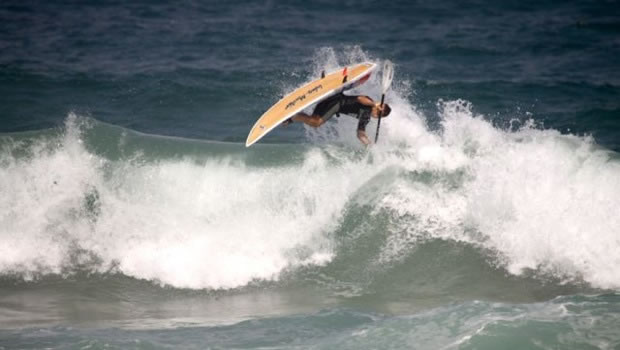
A hybrid between a surfski and a surfboard, waveskiing is for playful surfing.
The paddler is seated and is secured in by foot straps and a 'seatbelt' – this allows the individual to self-right or Eskimo roll when in need to do so. Waveskis have 3 fins like a surfboard and are wide platforms stereotypically about 3 metres or 10ft in length, double-blade paddles are used like sea-kayaking.
Moves practised are almost similar to mainstream surfing including aerials and flips.
Waveskis became popular in the 80s, yet a second peak in leisure sales and participation in competitions has been noted over the last few years. Another reason for this increase in popularity is the emergence of river-wave waveski competitions and the surge of interest in freestyle kayaking.
Competition formats are not dissimilar from those in the stand up surfing world; scoring is based on performance on waves ridden in a 20-minute period. To date, paddlers could compete at Open Internationals, at the World Cup (the first ever event was held in Portugal in 2013) and at the World Waveski Championship (last held in 2011 in Santa Cruz, Portugal, at the Ocean Spirit Festival).
The sport is controlled by the World Waveski Surfing Association with more and more national Associations being formed.
Neither waveski nor any type of other surfing, whether it be paddle surfing, surf kayaking, shortboarding, longboarding, kneeboarding or bodyboarding, is currently an Olympic discipline.