
 M. DAWSON
 J. CLARKE
 M. SMOLEN
 E. FER
 C. KUHNLE
 M. CHOURRAUT
 M. BENUS
 F. ANTON
 L. BOZIC
 K. HOSKOVA
 J. FOX
 BREZINSKI/BREZINSKI

 A. PETERS
 V. KHUDZENKA
 E. MEDVECKZKY
 GRIJIC/NOVAKOVIC
 L. QIANG
 M. DE JONGE
 R. POULSEN
 A. CHERVOVA
 S. TARNOVSCHI

 J. MOCKE
 E. LEVEMYR
 S. RAFAEL
 H. TAKAKU

 M. GRAZIANI
 J. EGAN
 N. LJUBEK
 MINDE/HAMAR
 PINTA/MOZZICAFI
 S. LAMMLER
 A. BUSLAIEVA
 M. WEGMAN
 S. REINOSO
Contributors - Paddlesports Back to overview
Stand Up Paddling
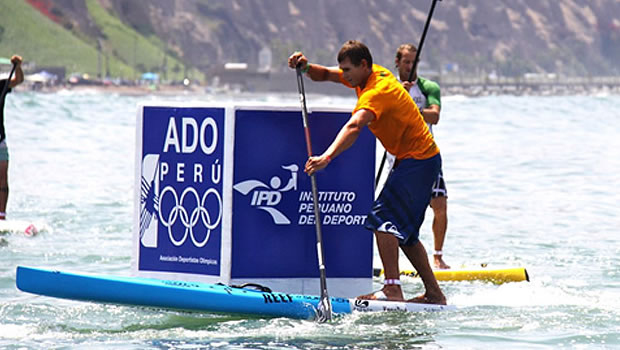
The world's fastest growing watersport, stand up paddling allows an individual to remain upright on a buoyant surfboard – realistically this is the closest sport to the biblical idea of walking on water.
You propel yourself forward using a paddle with a single-blade at one end and a T-shaped handle at the other; the shaft is a much longer than that of paddles adopted by other paddlesports. On average, the paddle is the length of a bent, outstretched arm above your head to the ground.
Boards come in different shapes and sizes depending on their function; race boards are less stable with pointed, slipstreamed noses while expedition boards are much thicker, durable, stable and ultimately slower for safety.
The beauty of stand up paddling is that so many disciplines have spawned from the brainchild which was ultimately Hawaiian paddle-surfing; ocean-racing, flatwater sprint, downriver stand up, paddleboard yoga, and anyone can take to the water leisurely or competitively.
Governed by the International Surf Association, stand up paddling is not Olympic but it certainly could make use of the same location for canoe sprint and rowing competitions in the future. The ISA World Stand Up Paddle and Paddleboard Championship is held every year which made its début in 2012, events for men and women are divided into SUP racing (technical and distance), SUP surfing plus paddleboarding (technical, distance) and a team relay to round off proceedings.
Athletes are also tested in The Stand Up World Series, a global race tour of six worldwide events including an additional final held at Turtle Bay, Hawaii. A 'Challenger Series' occurs parallel to the World Series encompassing more regional and smaller-scale events.