
 M. DAWSON
 J. CLARKE
 M. SMOLEN
 E. FER
 C. KUHNLE
 M. CHOURRAUT
 M. BENUS
 F. ANTON
 L. BOZIC
 K. HOSKOVA
 J. FOX
 BREZINSKI/BREZINSKI

 A. PETERS
 V. KHUDZENKA
 E. MEDVECKZKY
 GRIJIC/NOVAKOVIC
 L. QIANG
 M. DE JONGE
 R. POULSEN
 A. CHERVOVA
 S. TARNOVSCHI

 J. MOCKE
 E. LEVEMYR
 S. RAFAEL
 H. TAKAKU

 M. GRAZIANI
 J. EGAN
 N. LJUBEK
 MINDE/HAMAR
 PINTA/MOZZICAFI
 S. LAMMLER
 A. BUSLAIEVA
 M. WEGMAN
 S. REINOSO
“Under pressure I can see things very clear”
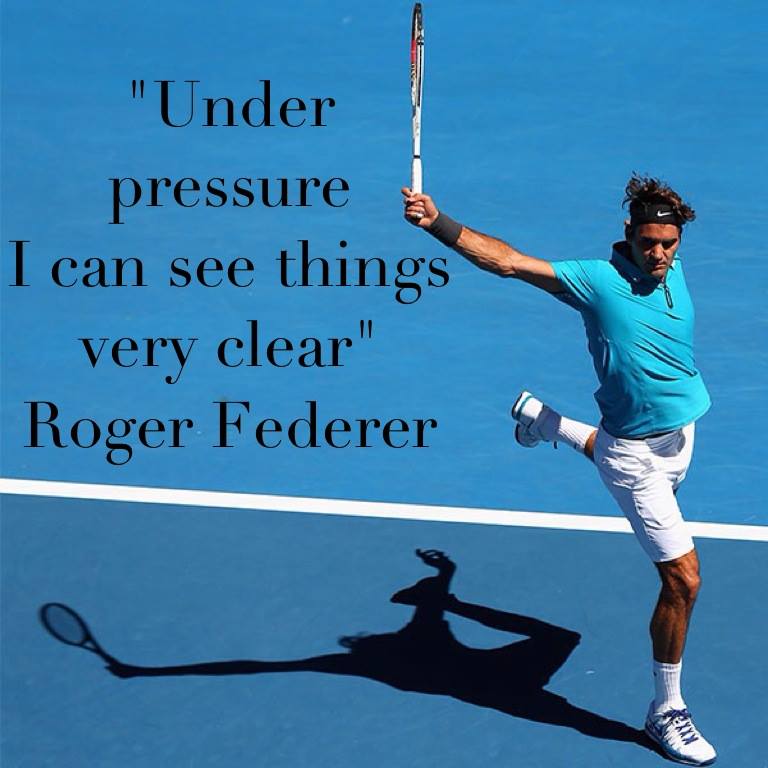
Jonathan Males | Performance1 - Feeling nervous before a race or running a big drop is natural. It’s your body’s response to a dangerous situation. The danger comes from a risk to self-esteem (“what if I mess up in front of everyone”) or from the physical risk (“what if I land flat and break my back?”). But why is it that nerves sometimes interfere with a good performance, and at other times they help us “see things very clear” like Roger Federer?
For a start, it’s important to acknowledge that psychologists actually don’t agree on a common definition of what pre-race nerves really are. Some talk about stress, or cognitive and somatic anxiety, others about arousal and activation. I’m not sure this matters too much, because the most important factor that influences performance is your level of confidence.
When you are confident then you are far more likely to experience pre-event ‘nerves’ in a productive way. Some psychologists call this positive state of mind a ‘challenge’ mindset, and it leads to useful physiological responses that increase your heart’s efficiency and energise your muscles for action. In this state of mind, you look forward to the task ahead and want to engage in it. This is probably what Roger Federer was referring to, a state of positive heightened functioning.
When you are less confident, then it’s more likely that you will experience a ‘threat’ mindset. There are subtle but important differences in the physiological responses that lead to your body being more stressed, your heart to be less efficient and your muscles less energized. In extreme cases this is the ‘dead possum’ response, when you feel sleepy or lethargic. You want to avoid the race, or at least get it over and done with. If you feel a strong sense of relief after the race, it’s likely that you’ve been in a threat mindset.
Movement between these two states of mind can be very fast. The fear at the top of a waterfall turns into exhilaration at the bottom, or a positive vibe can be jarred by an error in a slalom run.
What can you do to enhance your confidence and increase the chances that you’ll experience a positive, ‘challenge’ mindset before you compete?
There are three areas that you can influence:
- Your goals and motivation
- Your decision-making and race plan
- The people around you
 Goals
Goals
Paddlers who have realistic but challenging goals will feel more confident that they can achieve them. If your goals are too stretching or unrealistic, the gap between reality and aspiration is easily filled with worry. Ideally, you will seek to achieve in a competition only what you have already proved in training. On the start-line, it helps to focus more on process goals rather than outcomes that lie in the future. Bring your attention to your immediate environment, feel your paddle, the movement of the water, and imagine your first couple of strokes. Be as present as possible and appreciate being ‘right here, right now’, ready and able to race.
Decision Making
You will be more confident when you have prepared well and have a clear plan of action that you know you can execute. You need to feel comfortable with the level of risk you are taking, because in slalom there are often choices between “slower and safer” and “faster and riskier”. Taking too little risk can be as damaging as taking too much. On a river it’s less about speed, and often it’s “less risk = less excitement” or “more risk = more excitement”. Ideally you will have developed your mental rehearsal skills so that you have tested out options in your imagination and settled on a plan that you know you can deliver. Confidence is sapped by uncertainty, so work with your coach to refine your race day routine to get you on to the start line with a clear plan.
Other people
It’s easy to pick up, even sub-consciously, on other people’s fears. Make sure your race day routine only brings you into contact with people who are (realistically) positive and supportive. Try to avoid discussing your race with anyone who might make you question your abilities. Of course a good coach will challenge you to improve and give tough feedback, but this generally needs to happen when you can do something about it, not on race day.
Finally, remember that ultimately it matters less how you feel before the race than what you choose to do once you are on the start line. There are plenty of examples of paddlers producing great runs despite feeling sick with worry beforehand. The key is to be committed to your plan and do your best to deliver your own performance. Trust that once you start paddling your mindset will switch into execution mode, the anxiety will switch to positive energy and you’ll do what you have trained so hard to do.
For for more performance psychology related articles click here.
| This article is an excerpt from the forthcoming book about Performance Psychology for paddlesports that is currently being written by Jonathan Males. |