 M. DAWSON
 J. CLARKE
 M. SMOLEN
 E. FER
 C. KUHNLE
 M. CHOURRAUT
 M. BENUS
 F. ANTON
 L. BOZIC
 K. HOSKOVA
 J. FOX
 BREZINSKI/BREZINSKI

 A. PETERS
 V. KHUDZENKA
 E. MEDVECKZKY
 GRIJIC/NOVAKOVIC
 L. QIANG
 M. DE JONGE
 R. POULSEN
 A. CHERVOVA
 S. TARNOVSCHI

 J. MOCKE
 E. LEVEMYR
 S. RAFAEL
 H. TAKAKU

 M. GRAZIANI
 J. EGAN
 N. LJUBEK
 MINDE/HAMAR
 PINTA/MOZZICAFI
 S. LAMMLER
 A. BUSLAIEVA
 M. WEGMAN
 S. REINOSO
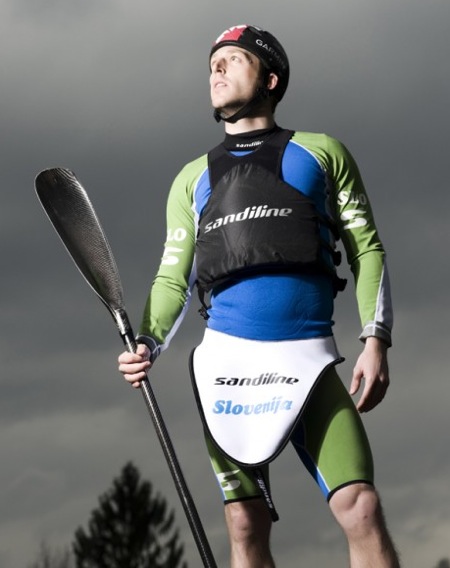
A person never gets tired of Gold. Downriver racing specialist Nejc Žnidarčič
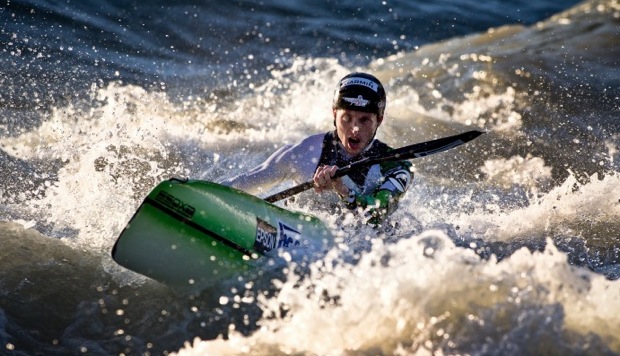
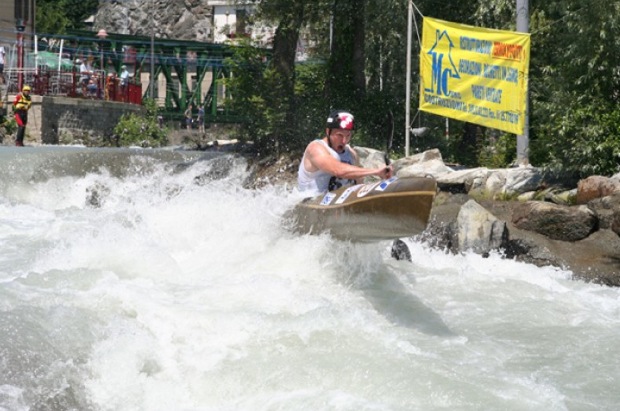
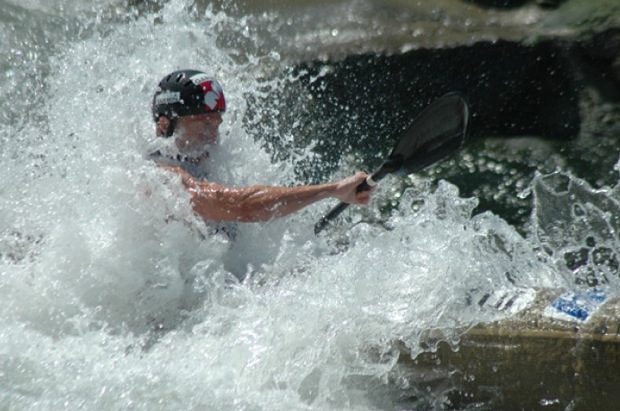
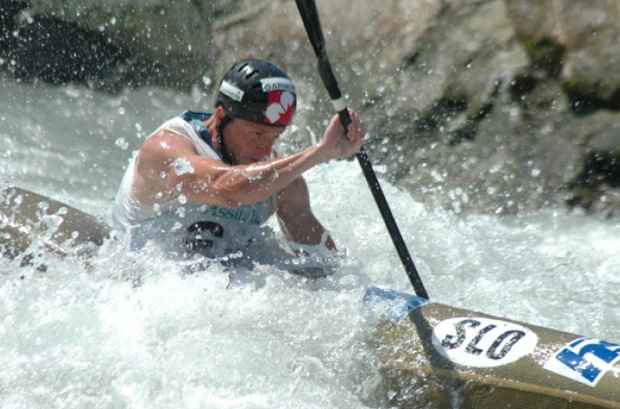
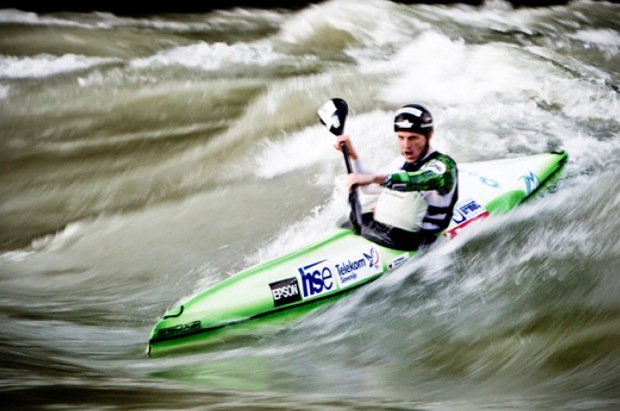
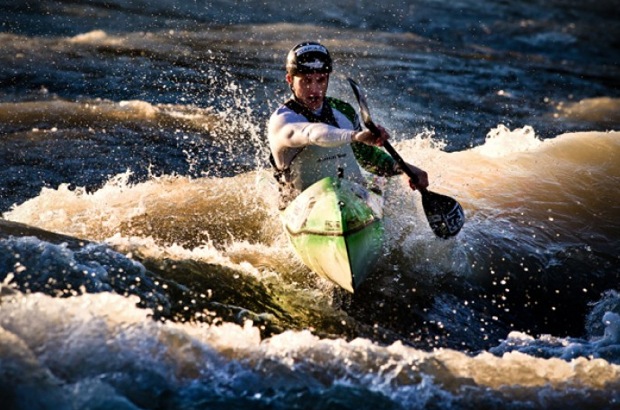
By: Nina Jelenc - Twenty seven year old Nejc Žnidarčič from Solkan, Slovenia, is one of the most successful downriver paddlers. Gnida, as his friends call him, has an enviable collection of medals from the most important whitewater downriver competitions, including a gold medal from the 2011 Wildwater Canoeing Sprint World Championships that were held in Augsburg.
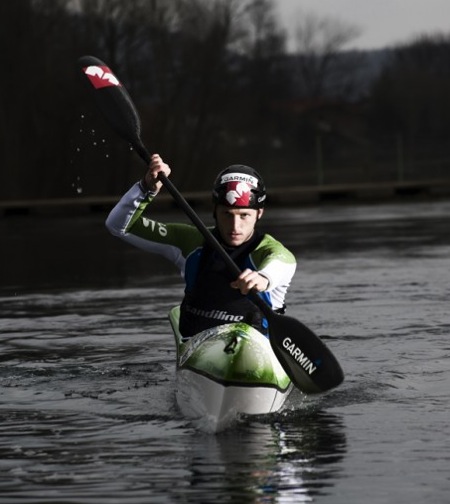
Last season he dedicated some of his time to Sprint canoeing as well with the goal of ensuring himself a spot at the Olympic Games in London. A true athlete who loves free ride cycling in his free time, started his sporting career in gymnastics, athletics, basketball and volleyball but once he discovered canoeing, he became really passionate about it. He says he felt this was the right sport for him the moment he sat in a boat and his love of it still continues. At the end of another successful season he talks about his achievements, balancing whitewater, downriver and sprint canoeing and about his expectations of the 2012 season.
You returned from the two most important Wildwater Canoeing competitions in 2011 with two medals. You are probably very satisfied with these results?
If you win the World Championships it’s hard not to be satisfied with the season, so from that point of view I am satisfied. But on the other hand, there is some bitter feeling connected with the European Championships in Kraljevo, Serbia, where I lost a gold medal by only a few hundredths of a second because of a mistake I made in the first run. Nonetheless I’ve been European Champion before, but not a World Champion.
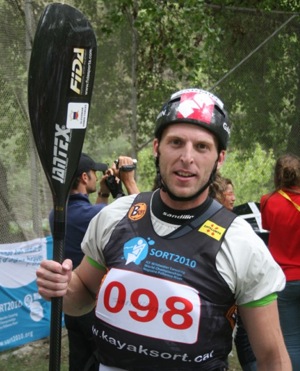 Were you disappointed that you were unable to repeat your gold medal win at the European Championships in Kraljevo?
Yes. To tell you the truth I wasn’t too happy with the silver medal, because I knew I could win this race. The Ibar River is quite easy and the sprint was a short one (it lasted for only about 70 seconds), so every mistake resulted in a costly time penalty. I made a mistake in the first run and I was only in fifth position. In the second run I really pushed the limits, I paddled nicely with clear line and set the best time of the day, but unfortunately it was only enough to gain second place.
In the past few years you have usually won team medals at the European and World Championships. What went wrong in 2011?
In 2011 some experienced downriver paddlers switched to sprint canoeing or put their jobs ahead of sport so we had a change in team members. Young paddlers came into the team with limited experience in the high pressured, most important competitions. They have now experienced how it is to compete in this environment and the mistakes they made will be of benefit to them. The guys (Kolar, Frančeškin, Oven and Debeljak) are very enthusiastic and I see great potential for the future. I think we’ll be able to show what we can achieve next year and we’ll again win team medals for Slovenia.
So far you’ve won almost every medal possible in this sport. What are your plans to complete the collection?
A person never gets tired of gold and in these times of crisis, gold is a good investment for the future. I still haven’t achieved a gold medal at the Wildwater Canoeing World Championships in the classic race, which I hope to win next year in Bourg St. Maurice. And in sprint canoeing, I’ll try to qualify for the London Olympics.
For the first time ever Augsburg hosted Wildwater Canoeing Sprint World Championships. How did you find this new type of competition?
For sprinters such as me, this is a huge plus because we now have another big competition in the same year as the European Championships. Also the new format where the total of two runs count and our top 15 competitors advance to the Final seems good, and is a great way to present this sport to spectators and the media.
You competed at the course that hosted the Olympic slalom in 1972. Was this very different to the natural courses you paddle?
Not really, because I’ve always liked competing on artificial courses. On artificial courses the technical perfection of a competitor really becomes evident. I see the future of Wildwater Canoeing Sprint World Championships being held on artificial courses.
Several thousand spectators and fans gathered in Augsburg during World Championships. This is an exception rather than the rule for downriver canoeing.
I’ve competed at some venues where lots of spectators supported us, but this depends on the venue itself. If the competition is in a city like Augsburg or in Ivrea, it’s not hard to attract people. Downriver canoeing is an interesting discipline because it’s easy to understand and good to watch, more so for me than slalom or sprint canoeing. Fewer spectators come and watch in remote venues and we often compete in small mountain villages that have small populations. In 2011, I competed at the World Cup and the European Championships in Sprint Canoeing and there were no more than 200 spectators which is sad for a discipline that is considered to be number one in our sport.
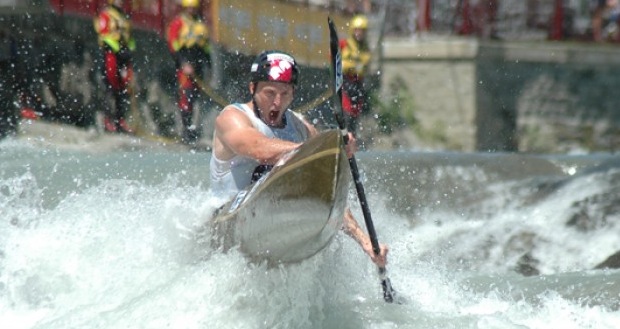
Do you still think it’s easier to become World Champion than “Paddler of the Year” in Slovenia.
I have gained five medals from World Championships, two from European Championships, more than 16 medals in World Cups and I have been the overall winner of World Cup Series twice. No Slovenian kayakers and probably few Slovenian sportsmen have achieved results like me, but because of the attitude of the federation it is like it is.
During the last year you competed in both Wildwater Canoeing and Sprint Canoeing. Balancing both disciplines must be really difficult?
During winter I paddle only in my sprint canoeing boat, because the winter training is similar for both disciplines. When the summer season approaches I spend more time in my wildwater boat. I had a lot of difficulty adjusting to my sprint canoeing boat because I had lost my technique and feel for the boat after paddling my wildwater boat. This was also the reason why I just couldn’t paddle well in sprint canoeing having just done the Wildwater Canoeing World Championships.
Do you regret your decision not to compete at the 2011 Wildwater Canoeing World Cups?
I decided not to paddle in the World Cups so that I could compete in the Sprint Canoeing competitions. My unsuccessful performances there, resulting in me regretting that I didn’t compete at the Wildwater canoeing competitions, especially considering one of the World Cups was held at my home course in Bovec.
In Belgrade, you competed in the K1Mens 200 metres event at the Canoe Sprint European Championships. The competitors at this distance have really improved since it became an Olympic discipline. Have you been surprised by the results your opponents achieved?
No, not really. The 200 metres distance is new to the Olympic programme so it’s understandable there’s been a lot of progress. The results will reach a certain level though and then won’t progress with the same speed any more.
Although you compete in Sprint Canoeing races, it seems that you still prefer Wildwater canoeing and that sprint canoeing hasn’t won you over?
Sprint canoeing is quite boring and uninteresting, especially in training. Wildwater canoeing will remain my first love, because we compete on different rivers and in beautiful valleys which fascinate you. To be the top Wildwater paddler, you have to be dexterous and you need many more skills to achieve great results. On the other hand in sprint canoeing, hard work is the most important factor for success and raw talent is not as important.
Have you decided to paddle in Sprint canoeing because it is an Olympic discipline or do you have some other reason?
I decided to do this solely because it is an Olympic discipline. I don’t think I will compete in Sprint canoeing after the London Olympics. I’ll return to Wildwater canoeing, because the European and World Championships will be held in Slovenia.
What are your plans for the next season?
Until the Olympic qualifications in May I’ll devote myself exclusively to Sprint canoeing as this is peak of the season. If I fail to qualify, I’ll prepare myself for the Wildwater Canoeing World Championships in Bourg St. Maurice.
What will preparations for the 2012 season be like?
The preparations are full on. I’ll bring some new things into my training and they will, hopefully, bring good results. I’ll work with a new coach in the fitness area. With him, we’ll introduce new techniques that are used in other top sports. I’ll also work with a nutritionist who’ll advise me on my nutrition. Jernej Abramič will still be the one who will prepare my training programmes.
Website Nejc Žnidarčič: www.nejcznidarcic.com