
 M. DAWSON
 J. CLARKE
 M. SMOLEN
 E. FER
 C. KUHNLE
 M. CHOURRAUT
 M. BENUS
 F. ANTON
 L. BOZIC
 K. HOSKOVA
 J. FOX
 BREZINSKI/BREZINSKI

 A. PETERS
 V. KHUDZENKA
 E. MEDVECKZKY
 GRIJIC/NOVAKOVIC
 L. QIANG
 M. DE JONGE
 R. POULSEN
 A. CHERVOVA
 S. TARNOVSCHI

 J. MOCKE
 E. LEVEMYR
 S. RAFAEL
 H. TAKAKU

 M. GRAZIANI
 J. EGAN
 N. LJUBEK
 MINDE/HAMAR
 PINTA/MOZZICAFI
 S. LAMMLER
 A. BUSLAIEVA
 M. WEGMAN
 S. REINOSO
Major row between the International Canoe Federation and Rio 2016
Guy Dresser | Royal Canoe Club - A major row has broken out between the International Canoe Federation and the organising committee of the Rio 2016 Olympic Games after it proposed relocating the canoe slalom event 700 miles away from the Olympic host city to an existing course at Foz do Iguassu in the far south-west of Brazil.
The Brazilians, faced with a looming economic crisis and budget overruns on their Olympic project, are keen to achieve savings wherever possible. The proposed move from Rio would avoid the Games organisers having to build a new venue. But for the sport, it would be little short of disastrous, denying slalom the oxygen of publicity that would come from being staged at the heart of the Olympic city in front of millions of people.
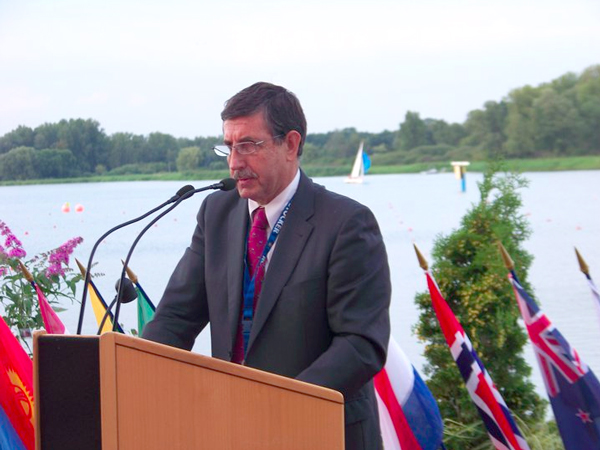
ICF President and International Olympic Committee (IOC) Member, José Perurena Lopez, said: “The news of the possible move 700 miles north is disappointing and threatens to marginalize our athletes, the competition and the future of Canoe Slalom in Brazil.
The ICF, which wants to see canoe slalom hosted in Rio itself said on Friday it would send experts to Brazil to carry out a comprehensive cost and design analysis of the proposed Olympic Canoe Slalom Venue to contest Rio’s claims that the new course would cost between $30-70 million.
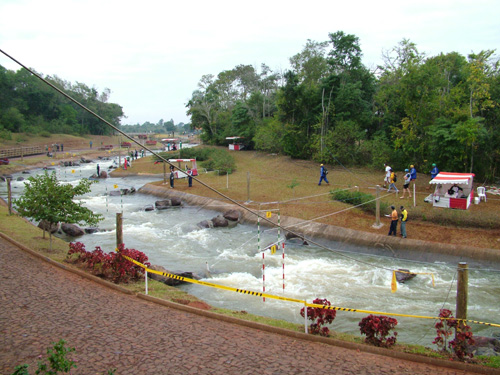 The ICF said it was confident and could prove that an Olympic-quality venue could be provided at significantly less cost than the figures quoted by Rio 2016. “[We] will now carry out a complete feasibility study of the proposed venue in Rio that will consider both the initial construction costs and the post-Games legacy opportunities,” the ICF said in a statement.
The feasibility study will also examine the costs of relocating the event to Foz do Iguassu, which hosted the 2007 canoe slalom world championships.
Senior canoeing figures are known to be furious at delays and failures to meet commitments by the Rio organising committee. Brazil was supposed to have hosted the World Canoe Sprint Championships this year but pulled out last autumn after admitting that it would not be ready to do so, a move that forced the ICF to find an alternative venue at Duisburg.
Publicly the ICF – and the IOC – has always said it was confident the Brazilians will get there but there is now mounting alarm at the IOC and dismay within the ICF at the poor state of preparations and the latest money saving wheeze not to build a slalom course in Rio is seen by some as a ‘final straw’.
Foz do Iguassu, by comparison with Rio, is minuscule. It has a population of just 259,000. Even with TV coverage, holding the venue there would deny canoe slalom the sense of occasion to be expected from having the magnificent backdrop of Rio.
Once the new expert review is carried out, the ICF said it will meet the Rio organising committee and the International Olympic Committee to agree where to host the Olympic canoe slalom event in 2016.
The ICF President said canoe slalom needed the profile of a Rio location to give it much needed profile in Latin America, where it is currently not a massive sport. He said: “Rio is a vibrant, multicultural and youthful city that lends itself perfectly to our sport. With a population of 6.3 million it provides a captive audience that our sport needs to drive participation across South America and deliver tomorrow’s champions.”
“We remain positive that we can deliver an Olympic-quality venue in Rio, on budget and on time,” he added, somewhat forlornly.