
 M. DAWSON
 J. CLARKE
 M. SMOLEN
 E. FER
 C. KUHNLE
 M. CHOURRAUT
 M. BENUS
 F. ANTON
 L. BOZIC
 K. HOSKOVA
 J. FOX
 BREZINSKI/BREZINSKI

 A. PETERS
 V. KHUDZENKA
 E. MEDVECKZKY
 GRIJIC/NOVAKOVIC
 L. QIANG
 M. DE JONGE
 R. POULSEN
 A. CHERVOVA
 S. TARNOVSCHI

 J. MOCKE
 E. LEVEMYR
 S. RAFAEL
 H. TAKAKU

 M. GRAZIANI
 J. EGAN
 N. LJUBEK
 MINDE/HAMAR
 PINTA/MOZZICAFI
 S. LAMMLER
 A. BUSLAIEVA
 M. WEGMAN
 S. REINOSO
Basque slalom paddlers campaign for artificial whitewater centre

Nick Harding | WPA - Calling for the development of a new whitewater centre in the Basque country (northern Spain): K1W slalom paddler Irati Goikoetxea (ESP) and Junior/U23 Basque slalom team coach Aritz Fernandez discuss the difficulties of training in coast-locked Donostia-San Sebastian.
Obstacle
“To get to the river we have to take a van from San Sebastian to Irun, 20km away towards – it can take 1 hour or an hour and a half. If we want a really good river we have to go to Pau (France) 2 hours from here.” Aritz Fernandez
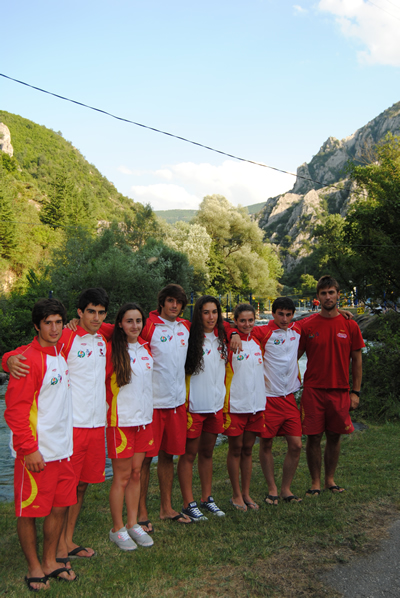 Geographically, slalom paddlers in the Basque country are on one hand disadvantaged by lack of nearby training facilities, but on the other the team, little by little, they are laying down better results on the international scene, for instance 17-year-old Miren Lazkano, Irene Egues Klara Olazabal and Unai Nabaskues recently won silver in the Junior K1W and K1M team event at the Junior/U23 World Championships in Penrith.
The reason for Team Basque's successes is, quite simply, sheer motivation overcoming distance to train twinned with an excellent, experimental support unit headed by the likes of ex-athlete Aritz Fernandez and double World flatwater Champion-sports psychologist Ekaitz Saies amongst an extensive team of others.
The Junior/U23 team used to train on the river at Irun 2-3 times a week, now Aritz and his colleagues chaperone the youngsters there almost every day. Costs mount up travelling the minimum 2-hour round trip each time (traffic-depending as the route is the major artery for the Spanish-French border).
The rich pool of talent in and around San Sebastian / the region has made do with the facilities 'a-drive-away' up to this point, but how long can this realistically continue for, given the time and expenses incurred? There is a feeling amongst local paddlers in the region that athlete growth, future results and, what ultimately counts, medal haul could be hindered if the matter of training facilities is not addressed.
Solution?
Investment in the construction of a new whitewater facility.
True there is a centre at Zaragoza, 3 hours away by car, yet it has been criticised, both publicly and by the paddling community, where it is apparently not used as much as it should be and its facilities are starting to fall into decline. This by no means helps the cause for the development of another artificial course in the Basque country, bringing the total to 4 in Spain including (La Seu d'Urgell which hosted the 1992 Olympics, Zaragoza and Ponts). Incidentally France has the most, including natural river diversions, with 16.
The difference is that here is a community with the right work ethic, with proven successes from limited training options, who could be massively influential in future World Championships and Olympic Games given the right opportunities to improve and refine their abilities locally. Tourism is up year on year in the region, plus the Basque Country is one of the most economically stable and wealthy departments in Spain.
 The interview
Back in June immediately after canoe slalom World Cup 1 at Lee Valley, London and the Senior European Championships in Austria, on the 'paseo' above stunning La Concha beach I caught up with Aritz and another one of his prodigies Irati, competitor in women's single kayak slalom, to find out their views. Ekaitz was also present. Moments before we started chatting, the whole entourage of male and female paddlers had just completed a morning's tough cross training on the beach; clichéd as it may sound, it was like watching an episode of 1990's US series Baywatch as they approached from afar!
Irati on her performances (pre-Prague)
At Lee Valley Irati qualified in her first run with 2x50 second mistakes but made a large mistake in the middle of the course on her second run and thus did not progress further: “I was sad and disappointed, but in slalom we thought I practised well, but it's all to learn for the next time, no? I will continue working on the points I've focused on.”
The Europeans were better for her; she laid down a near-one-minute finish with only a single penalty in run 1, she finished 5th overall after the 2nd run. However, her gate-touch in the semi-final meant her time, putting her into17th, which was not good enough to get through to the final; an incredible achievement nonetheless – GB's Fiona Pennie won that semi-final with Germany's Ricarda Funk winning the final in the end with a sub-100 time of 96.11.
Irati has changed her training program since Ekaitz started working with her. Winter gym sessions included 7am starts but strength and conditioning work was not done alone, but with other members of the youth squad to make the sessions more interesting and supportive of each other's needs:
“For me it's been an improvement [collaborating with Ekaitz], he does only my physical training. It was a big change; I was doing the same kind of work for 7 years and I wasn't motivated. With Ekaitz I was training the same, but in different ways, each week I had new exercises, I was improving quickly.”
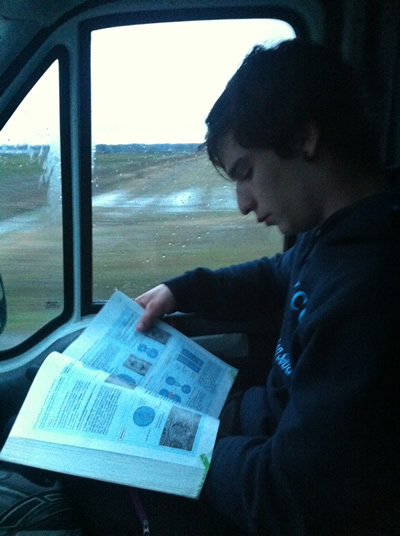 She also speaks highly of her team-mates' achievements to date while facing the challenge of training: “The thing is that we have just the beach, we paddle slalom and we WERE able to enter the national team and do good races outside. We are motivated hard-workers, it took us some time to do training on the river. We value each session a lot as it costs us a lot to get there. One part, this is a disadvantage; we sometimes aren't confident enough on some parts of the river, on the other hand we are very motivated.”
Keep your eyes on Irati's performance over the rest of the World Cups this year.
Aritz joins in the debate
“At La Seu it takes them one hour to train, here [in San Sebastian] we need 2-4 hours. We [the team] have a very good relationship as we spend a lot of time together, travelling and training. They are all friends; if one of them has a bad day the group makes them feel better.
The solution is to build another course here in the North of Spain because we need another one to get better in the world. Politicians can see that Zaragoza isn't working, it is difficult justifying doing something similar here. However, we are changing this – we are having more competitions at Zaragoza to promote the course.”
He is proud of how Irati's performances are panning out so far and is optimistic about what she can go on to achieve. As for Miren, Irene and Klara he said, “They are still very young, I think they can win the next Europeans” - Miren, who also paddles canoe, came 6th in the C1W final in Vienna and Irene was 14th in the semis in Junior K1W at the Junior Worlds.
However, Aritz did say there is one member of his team who needs to improve, jokingly; “Ekaitz, he has to train! I've never seen him in a slalom boat.” The flatwater 4x100m double gold medallist then butted in, defending himself, “I was an 11/12 year old when I first got into a slalom boat.” The essence behind the Basque team's success; banter and mates teasing each other!
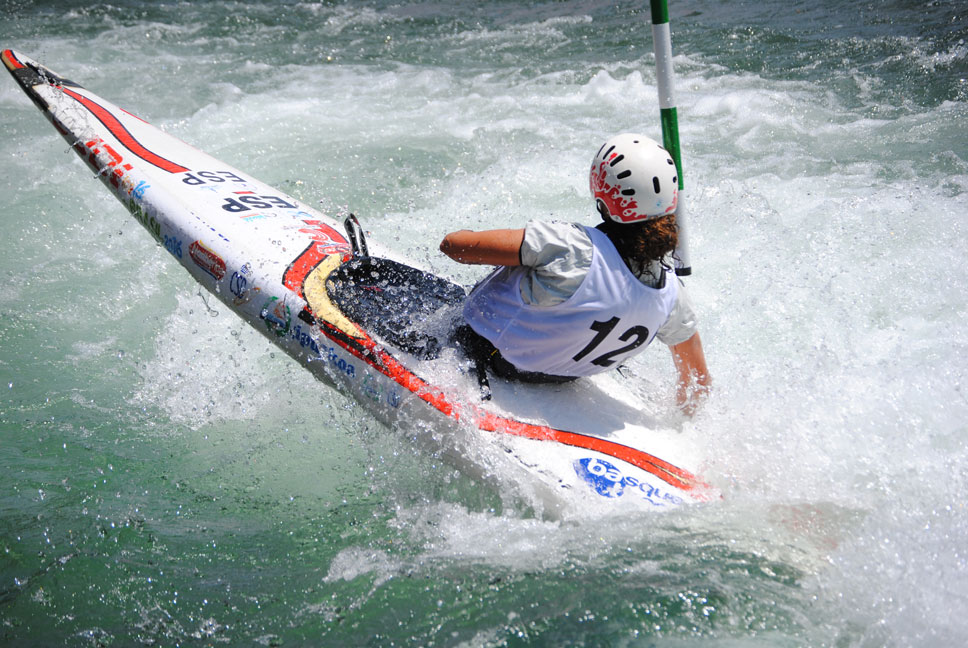
Reflection
As for the young Basque slalom paddlers, their next focus is the Spanish nationals – good luck to all participants.
Rounding everything off with a bit of symmetry to the opening, developing a whitewater course somewhere in the North of Spain is not only a necessity to give the highly-driven young paddlers of the Basque area the opportunities to train they deserve, but also is very much important to the ongoing legacy of Spain's medal haul – a country with an established history in winning medals in slalom and flatwater. What shouldn't be forgotten is that this construction project could be a real hot-potato given the area's economic stability; entrepreneurs and investors alike should be screaming to get involved!
Communicate with Ekaitz Saies and the Basque Canoe Federation here.
Post your views, should an artificial whitewater be constructed in the North of Spain?