
 M. DAWSON
 J. CLARKE
 M. SMOLEN
 E. FER
 C. KUHNLE
 M. CHOURRAUT
 M. BENUS
 F. ANTON
 L. BOZIC
 K. HOSKOVA
 J. FOX
 BREZINSKI/BREZINSKI

 A. PETERS
 V. KHUDZENKA
 E. MEDVECKZKY
 GRIJIC/NOVAKOVIC
 L. QIANG
 M. DE JONGE
 R. POULSEN
 A. CHERVOVA
 S. TARNOVSCHI

 J. MOCKE
 E. LEVEMYR
 S. RAFAEL
 H. TAKAKU

 M. GRAZIANI
 J. EGAN
 N. LJUBEK
 MINDE/HAMAR
 PINTA/MOZZICAFI
 S. LAMMLER
 A. BUSLAIEVA
 M. WEGMAN
 S. REINOSO
Legends: Richard Fox on the past, present and future
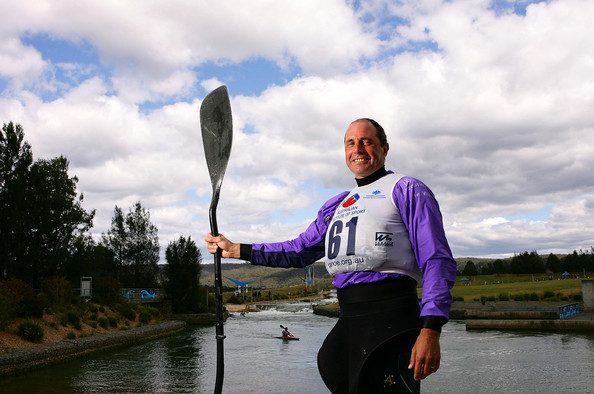
Part 2 of our 'Legends' series, Sportscene's Nick interviews Richard Fox; Performance Director for Australian Canoeing and 10-time kayak slalom World Champion for Britain.
See Legends Part 1 on Ivan Lawler.
Nick Harding | @nickhdg | Sportscene - If you're new to paddlesports and don't know the iconic name 'Richard Fox' here's a really brief low-down (otherwise skip to the below); 10-time World Champion from the late 70's to the early 90's in single kayak slalom in both individual and team events, he narrowly missed out on the podium finishing fourth at the 1992 Olympic Games in Barcelona. For outstanding contribution to canoeing/kayaking sport also as a leading administrator and coach (including a term as International Canoe Federation Vice President), Richard is a member of the World Paddle Awards Academy. As for Richard's family, let's just say there are several acclaimed branches of the Fox family tree – see our previous article.
Lessons for today from a golden past
Catching Richard off-guard with this one, he was asked what he would have done differently in his athletic career. He paused, “trying to stay clean on my first run at the Barcelona Olympics” he chuckled, “it was towards the twilight end of my career, I had a pretty fast run and hit a few gates, but overall I think I was very lucky with my careers and can't complain.” He added, “I might have tried to evolve boat designs a lot quicker, it looks a lot more fun now!”
Reminiscing about his early days, it was clear that he hadn't forgotten those who had helped him achieve his 10 World Championship titles, respect for the individuals and teams who supported him seemed to subtly ooze from his words – quite humbling to listen to.
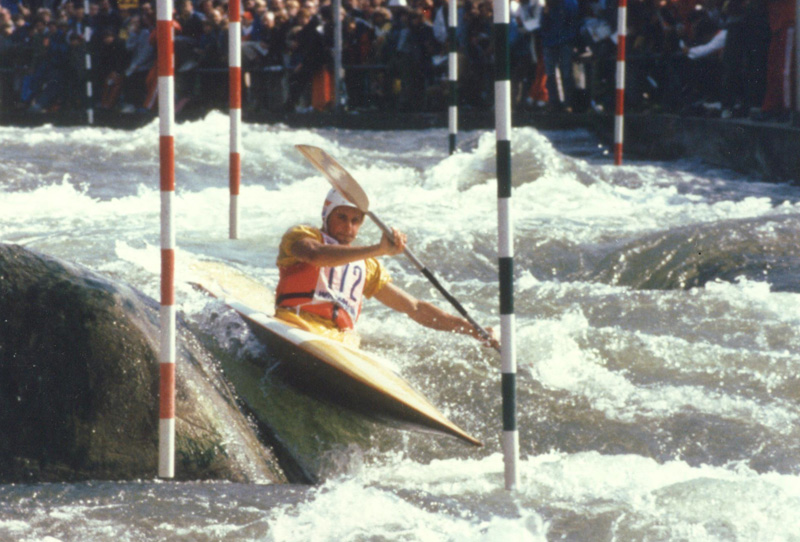 “I had a good grounding in the sport. I was fortunate to have technical coaching from Ken Langford and exceptional role models in Britain at the time in the late 70's, it was a high standard of paddling and I learnt from some of these athletes – their work ethic enabled me to gain an advantage. Then Hugh Mantle was influential in forming and holding an elite squad of kayaks at the end of the eighties which helped me stay ahead of the game.”
Of course change was inevitable in canoeing sport with the internet revolution and advances in technology – looking at both sides of the argument Richard acknowledges that this may have also hindered progress:
”In those days we weren't Olympic, people were a lot more resourceful and independent. We worked hard and we trained hard – there wasn't a quick-fix to things; information is now easily available and you can watch run after run on YouTube, back then it was a lot tougher for people to get going, to put up slalom courses or find solutions. I think now we have moved into a more professional era though. I don't have any regrets about how life was or how the sport was because it dealt me a pretty good hand, I enjoyed it and made the most of it.”
Richard's past in the UK has shaped who he is today; “I tend to move on in life pretty quickly. My life's been busy so I tend not to look back too much. I enjoyed going back [to the UK] in 2012, spending longer than fleeting visits, it was good to spend time at Lee Valley and at the old haunts in the area where I grew up.”
And as for his career highlights, as he put it he had quite a few and was fortunate to have them! He revealed that every one of the major competitions he won was a kind of highlight with a different personal meaning at various points in his life. Ultimately though Richard is proud of his first World Championship win in K1 (individual) at Bala, technically GB home soil. Augsburg '85 was also significant for him as it was potentially his biggest achievement in his career at that time, and not forgetting the WC at Mezzana '93 – it was not his final race ever but it was the last race he prepared for as an elite athlete.
Lots of pieces of advice there in Richard's words that current paddlers on all levels can draw from.
 Future opportunities
Richard and I chatted about the periodic and inevitable change that happened during his lifetime, and so what about going forwards? Is it a bright forecast? What is the long-term future of the sport? What opportunities are there?
First up, we talked about the outline of the current Olympic programme and how it it is viewed from public opinion.
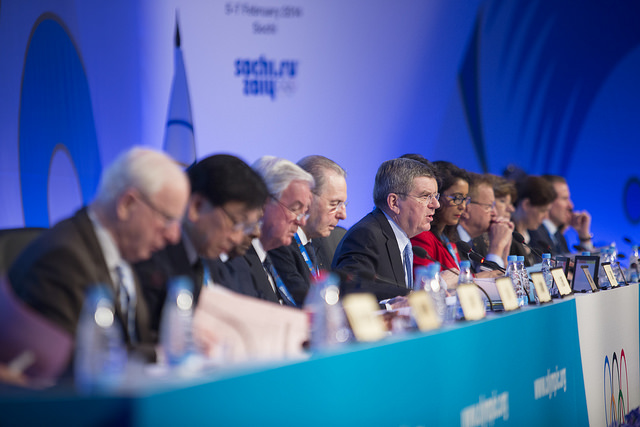
It is a worrying time as we have seen criticisms of canoeing/kayaking's place in the Olympic programme in the media over the last year or so, even to the point of that it may be 'axed' entirely from it. At the end-of-the-day opinions are just opinions but, as alarms bells ring, Richard says that the key to prolonged longevity is open-mindedness and exploration:
“What we are getting through subtle messages is that everyone could be examined in terms of the discipline and the events. If you think you are under threat you need to defend your territory. We need to entertain discussions whether it's time to address the content [of the Olympic programme]. The tough questions are the ones that need to be asked because if the sport's not asking them of ourselves, then we might find others and other sports will have answered them, which might not be the answers we want. We need to be cautious about just defending the current territory. We need to demonstrate a willingness to explore the diversity the sport has to offer. We need to have a much broader vision of where we are going.”
Richard suggested a whole plethora of activity that could secure the sport's exciting future: appealing to youth, encouraging further worldwide broadcast interest and investment, market each paddlesport discipline more so away from the Olympic programme and creating an exciting package in line with the changes seen at the Sochi Winter Olympics (mixing the traditional with the new and dynamic – 12 new events featured in the Sochi programme including fast-paced slopestyle and women's ski jumping). “The important thing is to remain relevant to the changing landscape of the Olympics.”
From this answer, it was the perfect opportunity to link to the next question; did he feel that other disciplines (like freestyle, downriver, rafting, etc. - see full list and explanation here) should be included in the Olympic programme? His answer is very interesting:
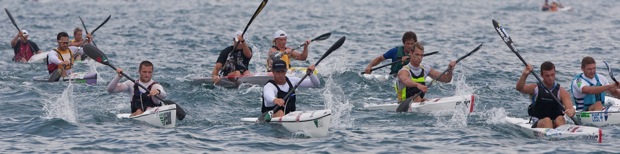
“My view is that the sport should be open to that discussion, while working hard to secure and promote the existing Olympic disciplines. If there's real benefit to the sport internationally and the future of national federations and for international federations to shift in that direction, then absolutely! That doesn't mean to say it should and would happen, but I definitely think openness should be explored, particularly if it is in the interest of the sport's development and commercialisation internationally, I think all the options should be put on the table for open evaluation because it would help drive the sport to a better ultimate Olympic product. I think we should provoke those discussions, I say openly to people 'why isn't there a longer distance event or open-water one that would suit a different athlete profile and countries or regions that don't have the infrastructure of a lake regatta course?' And why don’t we promote different formats on the whitewater slalom venue? Water is everywhere, whether inland or ocean; what sort of format of event will appeal to the Olympic broadcast market and how can it be justified? If the sport could evolve iconic events in nature and with mass participation, a bit like the cycling or road-running boom, why not grow that popularity and find a place for a new event in the programme?”
“Obviously any changes have to sit within a quota challenge of medals and athletes and that is a bit of a headache. Change is always painful, but perhaps not as much in the long term as the alternative of not reading the signs and moving with the times”.
Introducing new disciplines could be the way forward, after all one of canoeing-sports' strengths is that it is multi-disciplined. Interest and participation in all paddlesports is increasing day by day and globally.
If we did introduce other paddlesports, there could be problems with how they are governed. Here at Sportscene, we have often thought about the language and terminology used by the ICF and some national federations, for example why does 'canoe polo' actually refer to 'kayak polo', also something that the World Paddle Awards have worked on tirelessly to address. Therefore we had wondered whether separate 'whitewater and flatwater' federations or 'canoe and kayak' federations were the answer, of course we wanted to know how Richard felt about this:
 “I think it would be dangerous for the sport to go that way. It would be better for the ICF to be clear about its strategy and its vision to promote the best possible future in regards the Olympics,that could come from within a portfolio of disciplines and events and manage that effectively. If you start splitting it, for National Olympic Committees it becomes complicated, look at swimming, cycling and other sports they’re multi disciplined and combined under one roof. [However,] There are problems with this; minority interests feel they get steamrollered over and want to be separatist, but in the end I'm not sure – wow that's another tough one!”
You're probably thinking, there is still one subject that Richard hasn't been asked about yet if we are talking about the future of the Olympic programme; women's canoeing. Here's his answer:
“It's not about hanging on to the past and giving men a soft landing, which is how the sport is heading into Rio. I think the forward face of the Olympic movement is about an exciting presentation of sports that represent equality and universality, youth and opportunity. I therefore think there should be equal opportunities in terms of events for men and women and that's it! It should not be about a reflection of the past participation base internationally. The quicker we get there and invest further in that inevitable change, the better. I don't agree with the criteria based approach for women’s events that is talked about and the fact that you have to prove your worth to participate, there should be an equal number of participants and events in canoeing and that decision will drive standards and participation up. Period.”
Richard, as is well-known for, is keen on moving towards the gender balance (number of medals, participation, number of events), he was adamant that this could be achieved in a number of ways, but as we have seen from his answers during his interview this is only one issue among others that the sport faces.
In hindsight, Richard's responses have shown that there is much positivity on the horizon, it is a very exciting period for paddlesports as we watch, wait and hopefully also can participate in how the sport will continue to evolve with every cultural shift.
Sportscene chose Richard as its second 'Legend' not only for his paddling achievement, but for his lifetime of dedication to the sport and his openness to analyse it critically.
Photographer IOC Session: Ian Jones/IOC