
 M. DAWSON
 J. CLARKE
 M. SMOLEN
 E. FER
 C. KUHNLE
 M. CHOURRAUT
 M. BENUS
 F. ANTON
 L. BOZIC
 K. HOSKOVA
 J. FOX
 BREZINSKI/BREZINSKI

 A. PETERS
 V. KHUDZENKA
 E. MEDVECKZKY
 GRIJIC/NOVAKOVIC
 L. QIANG
 M. DE JONGE
 R. POULSEN
 A. CHERVOVA
 S. TARNOVSCHI

 J. MOCKE
 E. LEVEMYR
 S. RAFAEL
 H. TAKAKU

 M. GRAZIANI
 J. EGAN
 N. LJUBEK
 MINDE/HAMAR
 PINTA/MOZZICAFI
 S. LAMMLER
 A. BUSLAIEVA
 M. WEGMAN
 S. REINOSO
Interview with Sportscene founder Rob van Bommel
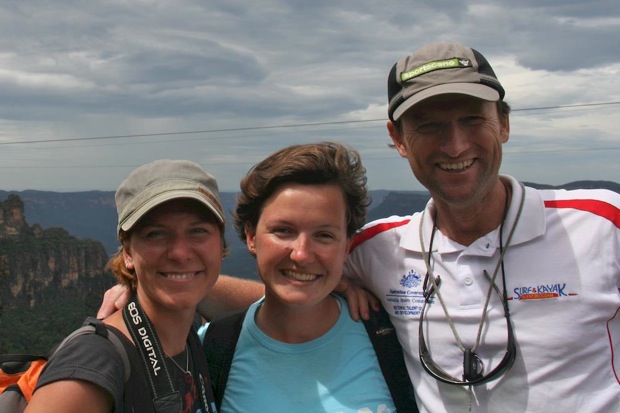
In 2009, ‘Sportscene Media & Consultancy’ was founded by Rob van Bommel in Australia. Rob had previously held several executive positions for multinationals such as ING Group, Halifax Bank of Scotland and KPMG. Lou Lockhart, journalist and Sportscene Contributor, caught up with Rob to find out more about the background behind this exciting venture.
Did you paddle yourself?
Yes, I started with canoe slalom while I was in secondary school. At the time I also played canoe polo, paddled in the surf, did downriver racing in winter and I was fortunate to travel the world to paddle white water. I truly enjoyed coaching the juniors in my canoe slalom club and teaching people all over the world how to paddle whitewater.
My first time in a slalom boat was in 1984 on a slalom course in the Netherlands and in 1985 I raced my first big competition at the Junior Worlds in Spittal, Austria. That same year I had my first series of serious whitewater experiences in beautiful Southern France on the Guisane, the Gyronde, the Guille and the Ubaye, where I also raced my first French competition. Later in the Himalayas I paddled bigger rivers like the Karnali and more technical rivers like the Bhote Kosi. It was a wonderful life style and maybe still is...
After being in the Dutch National Team for some time, I also started to focus on other sports such as freestyle and alpine climbing, mountain biking and road cycling. I continued to hike a lot, which I was doing any way because of our expedition style canoe trips in the Himalayas.
Now I enjoy paddling on the ocean and I am trying to master the "perfect stroke" in sprint. It's fascinating.
Why did you start Sportscene?
For two reasons I guess. I had a rich and prosperous corporate career where I learned a lot. It also offered me many opportunities for self-realization, a lot of travel and to work with different people in complex and challenging environments. After 14 years I got the feeling that my future in the corporate world would become 'more of the same' and I couldn't withdraw from the perception that generally speaking decision making was only focused on the short term. Meanwhile I was also learning how to become a filmmaker so I could document my childhood passions of photography and different paddle sports.
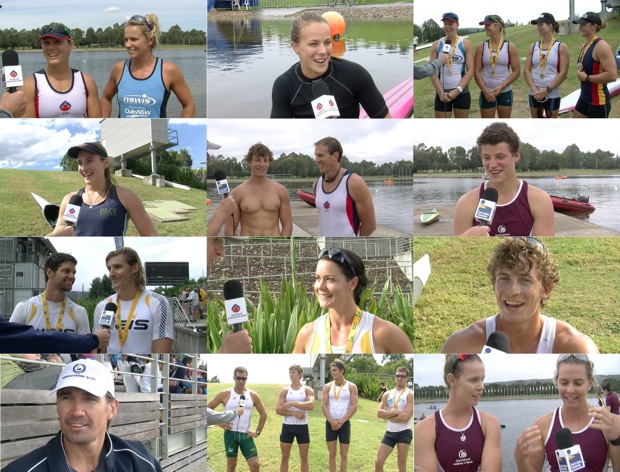
I hadn’t seen anyone focus full time on the media exposure of competitive paddle sports so in 2009 I started Sportscene. With my sports and corporate background I was motivated and passionate to make a difference and provide the sport and the athletes the attention they deserve.
I look back positively on my corporate career. Both the world of sport and the corporate world can learn a lot from each other. Without my corporate experience I would not have been able to develop Sportscene to where it is now and where I want to take it in the future.
 What do you think the world of sport can learn from the corporate world?
I think a great example is that many large companies study their environments to find out what they can learn from it and then use this in their business and this includes sport. They invite for example athletes to talk with their employees to give them a broader perspective on life in general and performance to be specific. This does not happen much the other way around. Sometimes athletes can be quite egocentric - which is required to a certain extent - and some of them continue to become managers in the sport. This can result in a limited management style & culture of a sporting federation, committee or company and can have a significant impact on the development of products, sport and the athletes. It would be beneficial for sport to have people who know the sport or related products and services really well, and on the other hand being open minded to other areas such as people management, strategic development, marketing, finance and so on. Luckily the sport and sports industry have several of these people but the more the better. Just one mismatch between a person and a certain position can have a huge impact.
Who is doing well do you think?
There are several good executives, and I haven't met everyone yet ;-) but in Australia where I spend half of my time every year, Helen Brownlee and Richard Fox are two good examples. Helen is a true advocate and visionary. Whether it's the development of a region in the world such as Oceania, women in sport, or canoeing as a whole-of-life sport, she has an opinion and vision about it. And I love her stories. As a young woman - probably even before I was born - she once got lost in Amsterdam and she ended up at the Maritime Academy and the Principal of the Academy helped her. Even at that young age, she had the ability to attract the attention of the people at the top of an organization and engage their help! Richard is innovative and ahead of his time, just like he was when he was an elite athlete.
In general I really appreciate those managers that know the sport and their athletes, have good communication skills and develop their managerial/leadership capabilities. I think we have several in our community.
Are there things you are not happy with in our sport?
I wouldn't say 'not happy' but there are definitely challenges and opportunities in our sport. I have practised several paddle sports myself and because of my focus on Sportscene, paddle sports are one big and interesting community. In reality however it's still more like the Tower of Babel, a patchwork. For example most people in sprint don't know that Corinna Kuhnle is the current World Champion in slalom and most of the slalom athletes don't know that Adam van Koeverden won the 1000 metre race at the Worlds in Szeged last year. Another interesting example is that most people will remember who won the K1 Men in La Seu d'Urgell in 2009, but not who won the C1 Women in Bratislava last year.
To me this and other things represent an interesting opportunity to create more awareness and more exposure for paddle sports.
What do you like most about Sportscene?
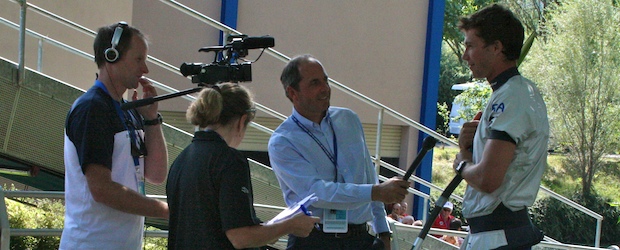
This is a hard question to answer because I probably like almost every aspect! Every day is a great day and it feels like I am doing my hobby full time. I love working with the athletes, trying to take good photos, work on new projects and services that contribute to the development of the sport, I love to see the athletes racing, discussions with the managers in the sport and so on. I really appreciate working with the Sportscene Contributors - people from all over the world who spend some of their time producing content and providing the sport with more exposure. I think - but certainly hope - that we have started a small revolution in the world of competitive paddle sports - showing that things can be done differently or just the next step. I believe that the contributors are the pioneers of a new era and I am proud and grateful to work with them.
Any favourite athletes?
Those who not only show a great performance on the water, but also have an awareness of their environment and contribute to or take responsibility for their community. There are athletes that may never become a World Champion but they are still my heroes.
Are paddle sports the only sports Sportscene is focussing on?
No, we also work for other sports such as tennis and cycling. We learn a lot while working for these more mainstream and 'professional' sports. But you also start to appreciate that the athletes in the world of paddle sports are much more approachable, really kind and fantastic people to work with.
What do you learn from working with mainstream sports such as tennis?
In general, I appreciate that they have adopted the more corporate techniques and insights of a modern organisation, and at the same time have kept their own identity and core strengths as a sports organisation. It is wrong to think that for example a hospital or sports federation should become a corporate institution, but it's good to learn from each other. From a media perspective it's interesting to see that they [tennis] highly value social media, more than paddle sports do on a managerial level. The smaller sports sometimes still believe that television is everything, instead of starting to service their own community through a bottom-up approach, and thus developing more exposure.
In tennis they realise that improving the technique to play tennis and attracting more young talent is actually better achieved through social media than television. This insight still needs to be developed in the world of paddle sports. I do see a growing number of canoe federations and executives that are starting to value the importance of social media.
 How should the sport develop?
I think the sport should develop in a holistic and balanced direction. What I mean with that is that every sub community probably has its own ideas about what should happen. The challenge and opportunity is to consolidate all this experience and insights in a clear direction and plan. A plan that bears in mind a diverse community but at the same time focusses on a few unequivocal objectives that develop the sport in the short and longer term. People who can translate such a plan and execute it on a community and national level are equally important. I believe there are already several good ideas out there. It's more about organisation and execution with the right people leading the way.
Another and more concrete example of what might help the sport is developing 'economy of scale' and creating more awareness within the community and between the different disciplines. Canoe sprint is a small sport compared to tennis and soccer. But if you, for example, add up sprint, slalom, freestyle, whitewater, rafting, polo and marathon, you all of a sudden have a bigger sport, with more athletes, a larger recreational community and more commercial opportunities. This is what we at Sportscene are aiming to do with our new website and other services. Aquatics is a good example of a sport that has successfully consolidated many disciplines under the one umbrella and has managed to make their sport bigger and commercially more interesting. It does represent a challenge but it can't hurt to think about it and consider the options.
What can we expect to see from Sportscene now and in the future?
We have just launched a new website and soon the beta version of a mobile application will go live for the iPhone, Android and Blackberry. We are in the middle of establishing interesting partnerships that will result in greater exposure for paddle sports and we have just started services that involve a kind of athlete management and support system for these athletes. Especially exciting will be our presence at the Olympic Games in London of course. But also the production of media keeps evolving by using an iPhone for example so we will continue to evolve with it.
In the end, with everything we do, we want to contribute to the development of the sport and the athletes: increasing awareness & involvement, generate revenue & support and increase performance on and off the water.