
 M. DAWSON
 J. CLARKE
 M. SMOLEN
 E. FER
 C. KUHNLE
 M. CHOURRAUT
 M. BENUS
 F. ANTON
 L. BOZIC
 K. HOSKOVA
 J. FOX
 BREZINSKI/BREZINSKI

 A. PETERS
 V. KHUDZENKA
 E. MEDVECKZKY
 GRIJIC/NOVAKOVIC
 L. QIANG
 M. DE JONGE
 R. POULSEN
 A. CHERVOVA
 S. TARNOVSCHI

 J. MOCKE
 E. LEVEMYR
 S. RAFAEL
 H. TAKAKU

 M. GRAZIANI
 J. EGAN
 N. LJUBEK
 MINDE/HAMAR
 PINTA/MOZZICAFI
 S. LAMMLER
 A. BUSLAIEVA
 M. WEGMAN
 S. REINOSO
ICF confirms marathon rules shake-up
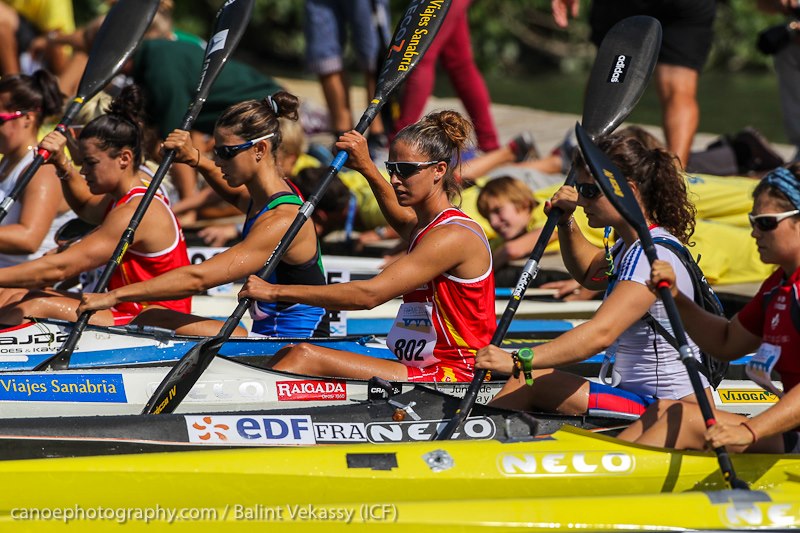
Guy Dresser | Oronne Communications - The latest set of International Canoe Federation rules for marathon racing have been published. As we predicted back in November, there have been a number of changes following experiences gained at major marathon events in the past 12-18 months.
The ICF Marathon Rules document appears to tackle many of the criticisms paddlers levied at organisers in Rome where portages were too steep and, in places, deemed rather small. The rules say bank space must be sufficient to allow “at least four K2s to be portaged simultaneously”.
There are also provisions to take account of damage and collisions – including a provision for penalising anyone who damages someone else’s boat or unnecessarily deviates from their course.
If it is considered that other paddlers have only had some minor disadvantage as a result of the incident the responsible competitor will get a time penalty of 30 seconds. If it is considered that the incident has given other paddlers a major unfair disadvantage the penalty will be disqualification.
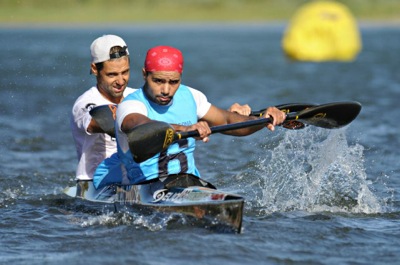 And there’s a false start penalty – 30 seconds if you jump a start.
The biggest change is that a penalty ‘box’ will be introduced at portages and competitors will, like those in triathlon, be required to stand in the box with their boat until the allotted time penalty has been served – then they can rejoin the race. The rules appear to indicate that you can opt to just have the time added to your race time – doubtless strategists will pore over whether it’s better to do this or go for the penalty box route.
Stipulations regarding course details are unchanged – the ICF is persisting with the monotonous lap system for World Championships (7 laps are recommended for men’s races) rather than the old A to B format favoured by race organisers in the past. The lapped format is supposed to be favourable from the point of view of broadcasters – but there is precious little evidence that marathon has made any real in-roads into the broadcasting world as yet.
From 2014 the laps will be reduced in size and all classes will then have an extra lap to paddle. Remembering how many laps you’ve done will just be another task to add to the list of things to do during a race.
Many Grand Prix organisers are adopting the lapped format too – though the rules also give a range of types of course that would be acceptable for ICF-recognised events. Unlike the lapped format required for World Championships, courses can be: (a) River courses without obstacles or interruptions; (b) River courses with obstacles such as weirs, rocks or shallows involving obligatory or optional portages (c) Open water courses on lakes, estuaries or the open sea; (d) Any combination of the above.
Download ICF Canoe Marathon competition rules
