 M. DAWSON
 J. CLARKE
 M. SMOLEN
 E. FER
 C. KUHNLE
 M. CHOURRAUT
 M. BENUS
 F. ANTON
 L. BOZIC
 K. HOSKOVA
 J. FOX
 BREZINSKI/BREZINSKI

 A. PETERS
 V. KHUDZENKA
 E. MEDVECKZKY
 GRIJIC/NOVAKOVIC
 L. QIANG
 M. DE JONGE
 R. POULSEN
 A. CHERVOVA
 S. TARNOVSCHI

 J. MOCKE
 E. LEVEMYR
 S. RAFAEL
 H. TAKAKU

 M. GRAZIANI
 J. EGAN
 N. LJUBEK
 MINDE/HAMAR
 PINTA/MOZZICAFI
 S. LAMMLER
 A. BUSLAIEVA
 M. WEGMAN
 S. REINOSO
Do the work, then go home and dream. Interview with U23 Marathon World Champion Morten Minde
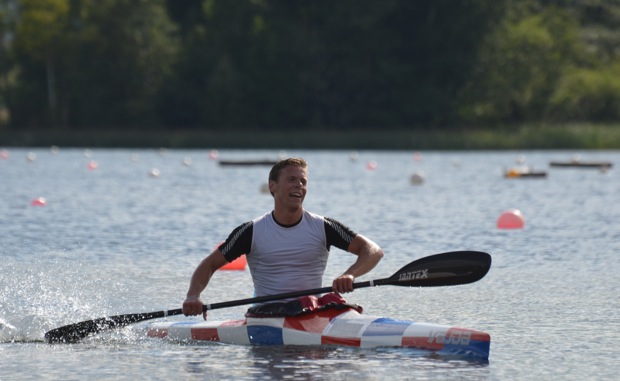
Being ranked the #3 paddler of Norway in 2011, Morten Minde is leading an outstanding new generation of Norwegian paddlers, including Mathias Hamar, SindreKumle Berg, Agnes Brun-Lie, Karl Anders Sletsjøe, Joar Thele, Eivind Vold…. There is now a Norwegian champion for every distance all the way up from younger categories to U23. Last season Morten received worldwide recognition after becoming U23 Marathon World Champion in Singapore. Only two days after that, with his partner Mathias Hamar, he came fifth in the Senior K2 race, just a minute and a half behind World Champions Bouzán and Fiuza, a true sign of his brilliant future.
Originally from Strand, in the outskirts of Oslo, he’s now living in Bergen, the beautiful city on the Norwegian west coast, where he’s studying for his Bachelor in Economics.
In the busyness of his studies, he has kindly taken time out to talk with Sportscene.
Living in a country where winter sports are the most popular, how did you start canoeing?
My brother tried a lot of sports when he was younger and most of them I tried as well. Luckily he was one of the fastest paddlers in his younger years and he was an inspiration to me early on. Since I had only done team sports, this was something new to me. And of course as his younger brother I wanted to beat his personal best. I wasn’t able to beat his times until my last year as a junior, and I still struggle to beat his 200m record.
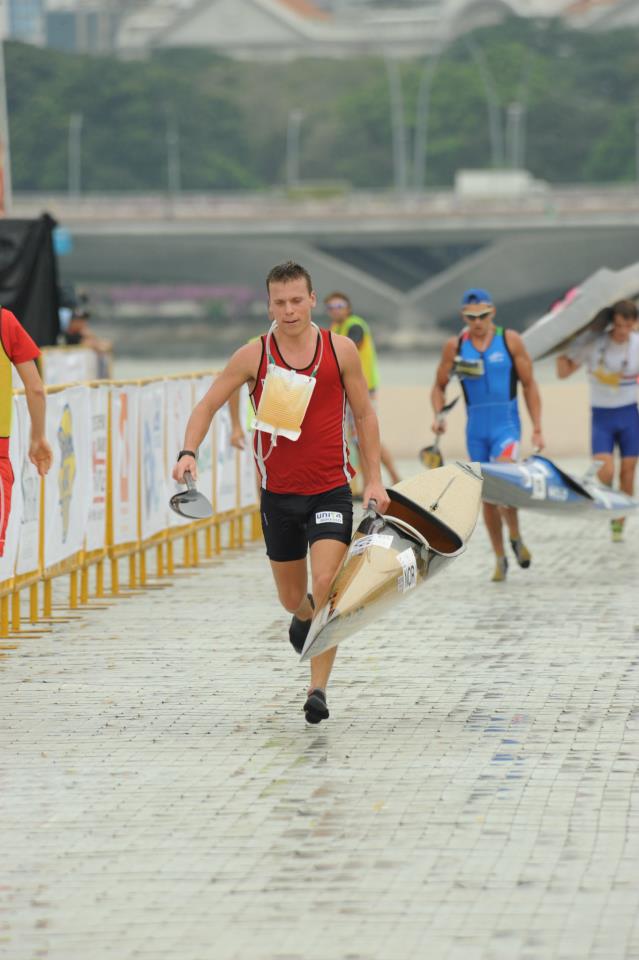 Prior to our interview you told me about the importance of the Strand Kajakk Klub in your development, and also about having very experienced coaches who guide rather than analyse each performance. Also, that there is a feeling among the paddlers that they are all links in the same chain, so the older paddlers teach the younger and so on. Tell us a bit more about this philosophy of paddling that you’re involved in…
I want to keep evolving in the future, and my home club, coaches and “coworkers” are key elements. In our club, the older paddlers are passing on their knowledge to the younger ones. Most of my knowledge about paddling in a group and boat handling I have learned from the masters at my home club. When it comes to my coaches they make sure I have the knowledge to do most of the work by myself. They give me pointers on what I should do with my technique and monthly plans year round. This gives me room to make my own plans, and I love it. This gives me a feeling of owning and controlling my progress. It is really motivating and I often do my best sessions after a long day of planning, but of course my coaches look over them before I paddle.
Winter in Norway is a tough season for summer sports, it’s so cold and there aren’t many hours of daylight. Do you still manage to paddle in the open air some days each week or do indoor workouts become the main tasks?
Winter time can be tough on a paddler in Norway. But it might also be a strength if you use it wisely! It is definitely better to have a good cardio session on skies or on foot, than a mediocre session in the kayak in winter. Our training focuses on being diverse in the younger ages, but the older you get the more specific winter training gets. Another positive side of being away from the kayak for two or three months is that we can recover properly from any damage the long season may have done to sore muscles and tired minds. A normal week would consist of 6-9 sessions on dansprint kayak ergometer. Running and weights fill the rest of our training hours.
Your victory in Singapore was under very unpleasant conditions with high humidity, heat and heavy rain. Did you specifically prepare yourself for such conditions as they are so different to your home?
The conditions were undeniably different, departing from almost zero degrees and arriving in 28 degrees was quite hard for the first couple of days. But once again, my coach was very clever and gathered all the information we needed to be well prepared. We followed a simple tactic for the first few days, don’t stress your lungs, and give them time to acclimate to the conditions. This sounds really simple, but when you enter the competition site it is often hard to hold back.
Well, it definitely worked, as you knew how and when to take your chances during the race and race well.
I already knew most of my competitors from the European competitions, and who to keep an eye on. One of these was the European champ Emilio Llamedo, who beat me easily in France in midsummer. He was brilliant that race and he really taught me a lesson. While I used energy trying to break up the pack, he was riding the wash and waiting for the last portage to make his move. Still what impressed me the most, was how he came over to my boat right after crossing the line in Worlds. Remember that as a favorite I came second, and the first thing he does after crossing the line is giving me a hug. That moment really struck me and I will remember it for a long time. Moments like that and when the more experienced paddlers, like Ben Brown and Shaun Rubenstein, congratulate you, I will remember forever.
It says a lot about Emilio, but also about marathon. Everyone is supporting and congratulating each other. In comparison to sprint where you almost can feel the tension, marathon has a more relaxed atmosphere.
When it comes to sportsmanship, Emilio and Ben Brown are my role models. Both made my win even better, by simply congratulating me in a sincere manner.
Is Marathon a good platform to jump into the Olympic team or do you see it as a goal in itself?
This is a tricky question - a couple of years ago I would have said it was a way to get into great shape to then approach the 1000 metre distance. But now I realize that it requires a lot of specialization to be among the top paddlers on both sides. So in future, I will have it as a goal itself on my schedule and hopefully with a good season plan it will be possible to combine both.
Maybe including Marathon in the Olympic distances would give the message that this discipline could be a second chance and opportunity for many paddlers?
This is definitely something the canoe federation should work on. For example in Singapore, my idol for many years, Ben Fouhy, participated. I was truly hoping that he would take the win and my observation of marathon paddlers told me that he would also. He is a great 1000 metre paddler, world record holder for several years, and a finalist in Szeged. But the true marathon paddlers gave both of us a lesson. He could really stretch the peloton, but the true marathon paddlers knew far better how to use waves and use the crucial portage to their advantage. But my answer to your question is of course yes. Marathon is more entertaining and exciting than normal sprint if you’re not familiar with the sport and this may be a good way to get a bit more world recognition.
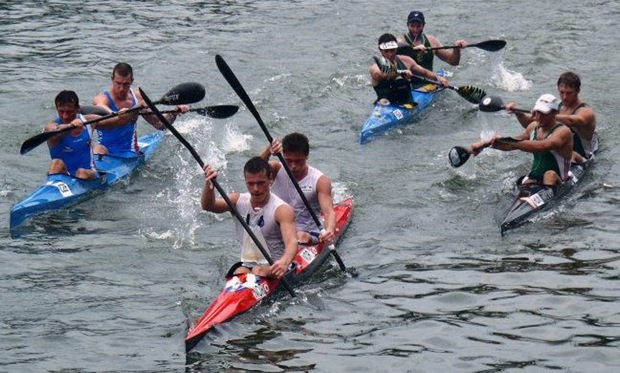
At the last Olympic K1 1000 Gold medal winners, Verås Larsen and Tim Brabants, were also Marathon medalists in their younger years. Now that you are successful, do you picture yourself fighting for medals in future Olympic Games?
I can’t really picture myself there right now. But I had no thought what so ever, that I would get to win the gold medal in Singapore this year either. My approach has always been to do the work, then go home and dream. So I will keep on doing my thing, and enjoy the journey.
Knut Holmann, Eirik Verås Larsen… Three out of the last four Olympic Games these legendary paddlers have had gold around their necks, even more impressive if we take into account that Norway’s population is less than 5 million. What’s the secret of this high success rate?
We focus a lot on technique in the K1, and all our planning in the last couple of years has been focused on developing good K1 1000m paddlers. Therefore Norway today is far behind most countries when it comes to K4, K2 or even 200 meters.
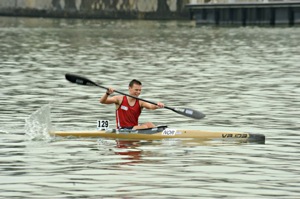 Having this canoeing heritage is so encouraging for generations to come in your country, but do you think it may also represent a pressure?
Personally I have never thought of it as pressure. It is comforting that others have made it, and that a lot of the people who did exactly that can still pass on their knowledge.
You still have three years in the U23 age category, what are your objectives for this time?
This year I want to take a new step forward in the sprint disciplines. Improving my 1000m and evolving as a K2 paddler are my main goals for the summer. When it comes to marathon I want to take a risk and challenge the big boys. It will be a dream come true to compete against my idols and role models for many years, and hopefully give them a hard time. We are also a good group of friends. Take my K2 partner Mathias Hamar, for example. This year he sacrificed his own chances in K1 for our K2, and he deserves his opportunity to prove himself as well. I feel quite confident that Mathias Hamar and Eivind Vold will be the guys to watch next year.
Have you got any official and/or private sponsors to help you achieve these goals or do you still paddle at a fully amateur level?
First of all I have to mention “Unit 4 Agresso”, because without them I couldn’t afford to go to Worlds, as our Federation doesn’t have a lot of money. They gave us the opportunity to fulfill our dreams, and the result was two gold medals and a fifth place. Talk about the dream team! I also need to mention the Vajda dealership in Norway “Gullpadleren”; I wouldn’t even have a boat this season without them. They believed in me even though I wasn’t at my best last season, and supported me when I needed it the most. This means a lot to me, and I am very thankful.
Apart from paddling and studying, what else do you enjoy doing?
I’ve got to be honest, kickin’ back and doing nothing is really nice. Relaxing with a movie or certain TV series (Californication, etc.) is something that takes my mind off sport or school. But almost every Friday we have taco night with friends, and we often have a visitor or two on normal weekdays. It’s nice sitting down with a cup of coffee and a snack after practice with good friends and talking about everything or nothing, to be honest.
My wish for the future.
That Norwegians start to support the sport and recognise the many great athletes we have had. Even more importantly, that the new group of paddlers who are paddling so well get some attention too.