
 M. DAWSON
 J. CLARKE
 M. SMOLEN
 E. FER
 C. KUHNLE
 M. CHOURRAUT
 M. BENUS
 F. ANTON
 L. BOZIC
 K. HOSKOVA
 J. FOX
 BREZINSKI/BREZINSKI

 A. PETERS
 V. KHUDZENKA
 E. MEDVECKZKY
 GRIJIC/NOVAKOVIC
 L. QIANG
 M. DE JONGE
 R. POULSEN
 A. CHERVOVA
 S. TARNOVSCHI

 J. MOCKE
 E. LEVEMYR
 S. RAFAEL
 H. TAKAKU

 M. GRAZIANI
 J. EGAN
 N. LJUBEK
 MINDE/HAMAR
 PINTA/MOZZICAFI
 S. LAMMLER
 A. BUSLAIEVA
 M. WEGMAN
 S. REINOSO
Interview with multiple Olympic champion Eirik Verås Larsen
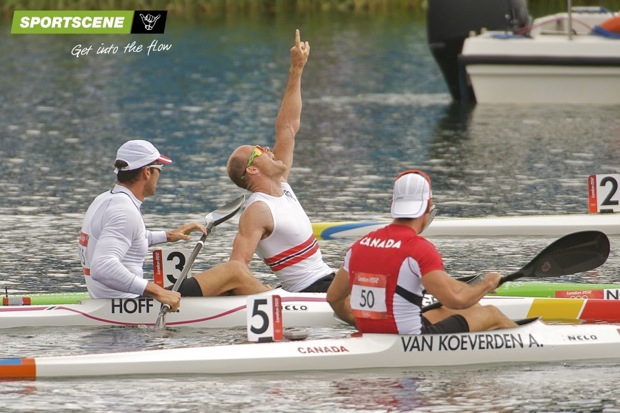
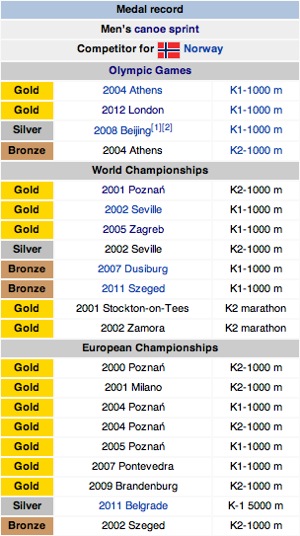
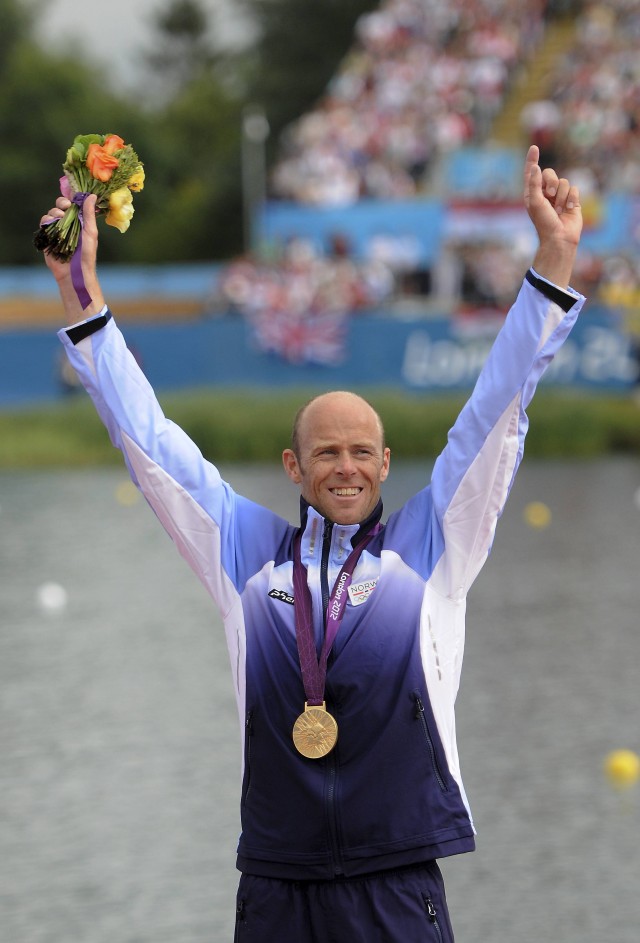
Yuliana Salakhova | Moscow | Sportscene - Eirik Verås Larsen (born 26 March 1976 in Flekkefjord) is a Norwegian sprint kayaker who has competed internationally since the early 1990s. He has participated in three Summer Olympics, and has won a complete set of medals (gold: 2004 K-1 1000 m and 2012 K-1 1000 m, silver: 2008 K-1 1000 m, bronze: 2004 K-2 1000 m).
What other profession would you like to try?
I would like to be a stockbroker. I like professions were you can compete. On the other hand I like the ocean and I might have become a marine biologist.
What are your plans this season?
I’ve just bought a house that needs some renovation and I want to do as much of this job myself. I’m also going to be a father for the first time and we’ve just bought a puppy. So I feel I have enough to do for next season.
 What is the most disastrous start you have ever had in your life? What was your reaction to it?
The first years I was on the national team I had some coaches that didn’t believe in me and I was out of the K4. I was not good enough to paddle K1 at that time. When paddling is your life, it’s a very tough time to go through when you feel that the coaches don't believe in you. My reaction was to train even harder and smarter and to prove the “stupid” coaches wrong! Feels very good…
Do you think it’s necessary to leave the sport at the peak?
Stay as long as you have a desire for victory.
Do you look after your diet?
I don’t count calories, but I think about what I eat. When I was younger the important thing was to eat enough so I could manage all the training while I was still growing. Before London 2012 I wanted to weigh as little as possible, but without losing muscle power. We carefully monitored the process and I was on a diet with less fat. In my daily diet I try to eat varied. I also try to eat “clean products”. With “clean products” I mean steak instead of sausage or minced meat. Fish filet instead of fish cakes and so on.
The victory on the Olympics is more than you could ever hoped for? Or do you have some other important objectives?
It was more that I could ever hope for. It has opened some new doors for me in terms of job prospects and also way of living/income.
What did you think of canoeing 7 years ago? And what do you think of it now? What has changed?
In my distance the 1000m I don’t think much has changed. We are not paddling faster than we did 7 years ago. In the 200m I think there has been a healthy development after it got on the Olympic program, they are going faster and you have to be 100% sprinter in order to go fast on this distance.
Can you recall what you were thinking about at the start in the final race in London?
I was thinking about the race and how I was going to race it. Stay to my raceplan, not getting distracted by the other athletes. I also remember telling myself that this race is what I’ve been waiting for, time to find out how good I really am.
What keeps you motivated to train and race?
The other guys in the training group, having fun training with your friends. The other motivation has been the desire to be the best. First I wanted to be best in my club, then Norway and then the World. For whom or for what are you ready to train wholeheartedly every day? For myself and my own desires. If kayaking is becoming a job and you do it for the money I think you will not train as well as you need to do to be a winner.
 Have you ever thought about leaving the sport? What was the reason?
I did quit in 2010. I was not motivated to train and didn’t find any motivation in trying to win another world championships gold.
In your opininon, what are your strengths and weaknesses?
I have good technique and I’m mentally strong. I train a lot even when I think it’s boring and I also know how to perform under pressure. My weakness is power / strength.
How and where did you spend your holiday after the Olympic Games?
After the Games I spent the last summer days in Norway at the place where I grew up, Flekkefjord. It’s on the coast, south of Norway. Later I travelled to Portugal for some beach life together with other Olympic athletes at the Nelo Summer Challenge.
What are the qualities of a leader? Do you consider yourself as a leader?
You need to be able to make decisions. I also think you need to be organized and able to think far ahead. You don’t need to know everything yourself, but you need to know where to seek knowledge and listen to other people on your team/group. I consider myself a leader.
Do you think we should achieve victories in our lives in the same way as in the sport, by strength and persistence?
Yes. I think knowledge and persistence are the keywords. I you want to be good at something you need to spend a lot of time “training” for it. If you want to achieve something extraordinary, you have to be determent and aware that there will be some tough times before you reach your goal.
What does bring success in sport: talent or intellect and persistence?
With intellect and persistence you can become the best athlete in the world. With talent alone you can’t be more than a talent. If you are a talent and have both intellect and persistence, then you will be a very, very hard athlete to beat.
Would you like to canoe all your life or do you have a wish to start something new from and achieve more/other successes?
At the moment success is not that important for me. I feel I have achieved enough and shown that if I want I can be the best at what I do. I’m sure this will change in some years, as London 2012 fades away. Maybe then I will try to compete in other areas, but I’m done competing at international level in canoeing.
Website Eirik Verås Larsen: http://veraaslarsen.com
Results London 2012: www.sportscene.tv/flatwater/canoe-sprint/result-archive
Proofreading: Nick Harding