
 M. DAWSON
 J. CLARKE
 M. SMOLEN
 E. FER
 C. KUHNLE
 M. CHOURRAUT
 M. BENUS
 F. ANTON
 L. BOZIC
 K. HOSKOVA
 J. FOX
 BREZINSKI/BREZINSKI

 A. PETERS
 V. KHUDZENKA
 E. MEDVECKZKY
 GRIJIC/NOVAKOVIC
 L. QIANG
 M. DE JONGE
 R. POULSEN
 A. CHERVOVA
 S. TARNOVSCHI

 J. MOCKE
 E. LEVEMYR
 S. RAFAEL
 H. TAKAKU

 M. GRAZIANI
 J. EGAN
 N. LJUBEK
 MINDE/HAMAR
 PINTA/MOZZICAFI
 S. LAMMLER
 A. BUSLAIEVA
 M. WEGMAN
 S. REINOSO
Canoeist Brabants optimistic after hard year
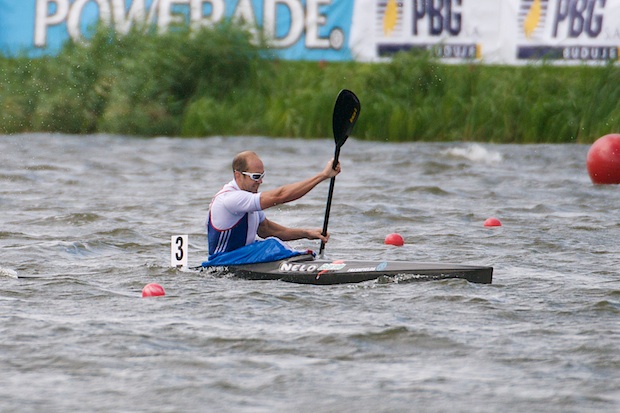
Nov 24 (Reuters) - A taxing year punctuated by injury and illness has come to a tranquil end for Olympic canoeing champion Tim Brabants who is looking forward with optimism to defending his K1 1,000 metres title in London.
Training is back on schedule, the 34-year-old British doctor told Reuters in an interview.
"It's been amazing so far, we have been really lucky," Brabants said. "The winter is taking its time to kick in so the water has been nice and flat and relatively warm.
"I have only worn my paddling gloves, which go over my hands, once, which is unusual."
Twelve months ago, Britain's first Olympic canoeing gold medallist needed surgery to repair his right shoulder after tearing a tendon while bench pressing.
"I was 10 weeks in a sling over the winter time so I lost a lot of training and fitness and when I came back I was just trying to do too much," Brabants added in the interview arranged by his sponsors EDF.
"In hindsight I did far too much trying to get my strength and my fitness back. It was disaster.
"I was over-training, I was getting sick all the time, colds, chest infections so that set my training back."
As a consequence, Brabants lost a race-off with Paul Wycherley for a place in the August world championships in Hungary.
"I had hardly raced in K1 all year, then my race for selection wasn't very good," Brabants said. "I'm not worried about it now, I'm back to 100 percent training, volume and focus.
"We have selection trials anyway in Olympic year so it doesn't matter who qualifies in the previous year."
If he clinches the one place at stake in the British team, Brabants will be competing at his fourth, and probably final, Games.
 COMPETING DEMANDS
"The Olympics is something special," he said. "As an athlete in my type of sport, a relatively low-profile sport, the Olympics is the main event for us.
"It's rare for an athlete to compete on home soil at a home Olympics Games and it's going to be memorable.
"The building up process to an Olympics is special, too, seeing the Olympic venues coming together and being built and the excitement that goes with it.
"You see how much effort goes into it, how large it is, the number of people involved. The athletes are such a small minority."
Somehow, Brabants managed to combine the demands of studying medicine with the training routines of an elite Olympic athlete.
"I just had to find the right balance; it didn't always work," he said. "At university I had to miss out on the social side of things, training in the morning, straight into lectures, straight out of lectures to training again, then the evening study and trying to get an early night to do the same thing again.
"But for me it was really important to get a career under my belt, to get my degree while I had the opportunity to because it opens doors later on to make life a lot easier."
Another, and a far more enjoyable, challenge has been the birth of his daughter Jules in January this year.
"It brings a nice dimension and it readjusts your balance and your focus," Brabants said. "It puts everything you are trying to achieve into focus."
Brabants will now spend three months in Cape Town during the South African summer and said both physically and mentally he was having no problem coping with the workload.
"It's what I am used to, what I have done for so long," he said. "If you are passionate about competing well in London, it's quite easy to get out of bed and train hard.
"I know that my best friends and fiercest rivals internationally are doing the same thing."
Brabants will end his international sporting career after next year's Games "unless I find a different sport or a new lease of life" and resume his career as a doctor in accident and emergency departments.
"I think it kinds of complements the style of sports quite well because you like the fast-paced environment," he said "A lot of different areas of speciality, a high turnover of patients, you have to be focused and it's stressful."